
Introduction
As the global electric vehicle (EV) industry chain accelerates its shift towards Southeast Asia, Indonesia, holding critical nickel resources and immense market potential, is a focal point. Recent signals indicate that the direction of Indonesia’s 2026 EV industry policy is now clear: the 40% TKDN (Domestic Component Level) mandatory requirement will officially take effect, while the widely anticipated EV purchase subsidies are likely to be extended. This combination of a “hard threshold” and “soft incentives” marks a definitive shift in the Indonesian market from a “product import” phase to an era of deep competition in “localization capabilities.” This article, based on the latest policy developments, outlines the core points and strategic responses for Chinese enterprises operating in or planning to enter Indonesia.
I. Policy Combinations: Defining Access Thresholds and Reshaping Incentive Logic
The year 2026 will be a watershed moment for Indonesia’s EV industry. Through two core policies, the government has clearly charted the dual-track path for future industrial development.
(A) The Hard Threshold: 40% TKDN Becomes Mandatory, a “Veto Power” for Market Access
Unlike previous policy grace periods, the 40% TKDN local content requirement will become an absolute, non-negotiable “hard” for all EV products sold in the Indonesian market starting in 2026.
Policy Background and Timeline: This requirement originates from a Presidential Regulation enacted in late 2023. After adjustments, 2026 stands as the final deadline for full implementation, underscoring the Indonesian government’s firm resolve to build a complete, robust domestic industrial chain. TKDN is not only the key to market access but also a prerequisite for participating in government projects and state-owned enterprise procurement.
Phased Increase Targets: The policy not only sets immediate requirements but also establishes a clear roadmap for future increases:
Four-wheeled EVs and above:Must achieve 40% TKDN by 2026, increasing to 60% by 2027, and targeting 80% by 2030.
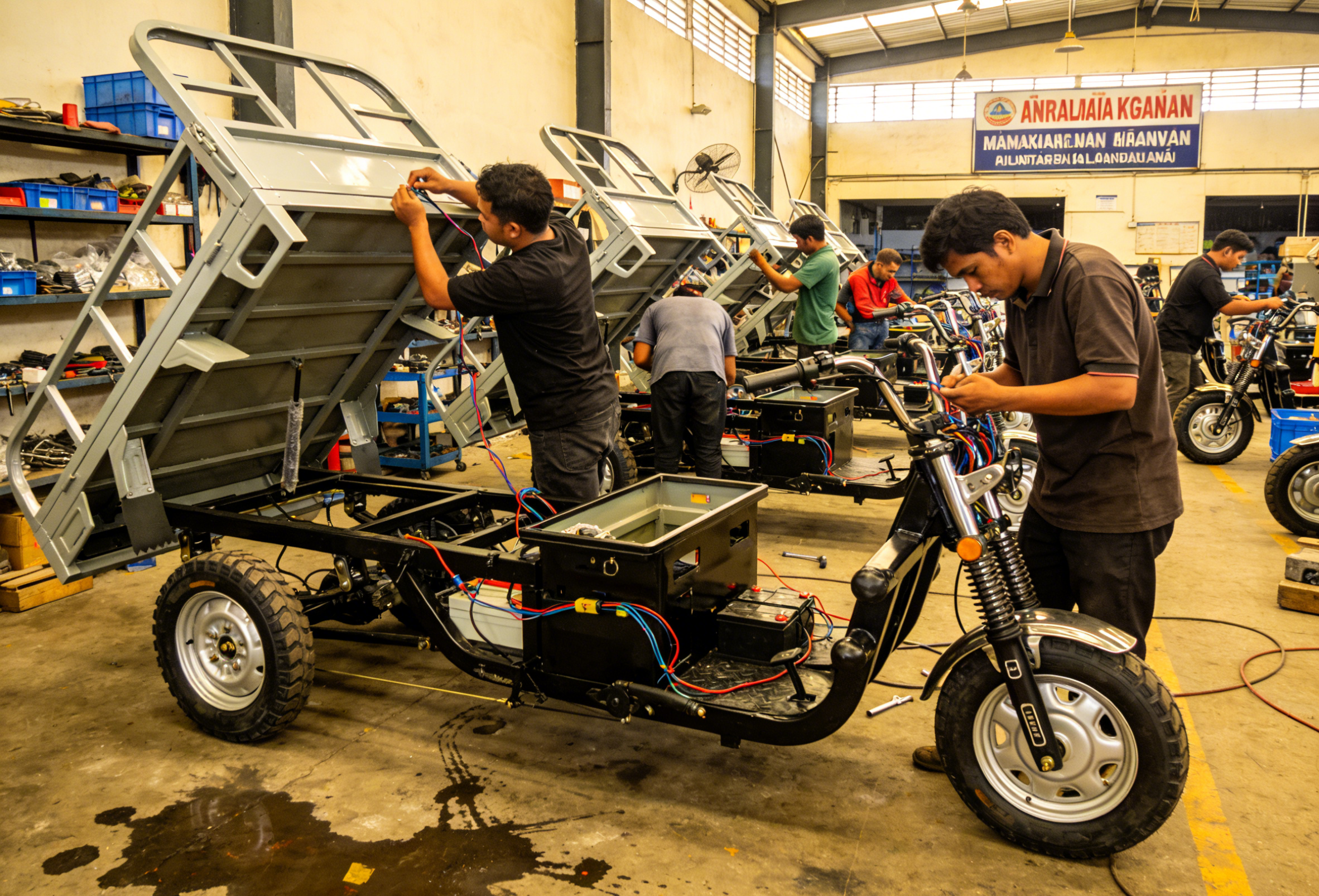
Two-wheeled/Three-wheeled EVs: Also start at 40% TKDN from 2026, subsequently increasing to 60% and 80% following the same timeline.
Full Industry Chain Penetration: Upstream sectors like electronics and traditional automotive components must also meet 35%-40% baseline TKDN requirements, creating a systemic push for localization across the entire value chain.
Certification Facilitation: To facilitate compliance, the Indonesian Ministry of Industry significantly streamlined the TKDN certification process by May 2025, reducing the cycle from 3 months to just 10 days, thereby lowering the time and cost burden for companies seeking compliance.
(B) Incentive Shift: Subsidies May Be “Precisely Renewed,” Tightly Linked to Localization
As a key market catalyst, the fate of EV subsidies post-2026 is a major focus. The latest signals suggest subsidies will likely continue, but in a completely new form.
Signals of Continuation and Core Considerations: Indonesia’s Finance Minister recently indicated a careful evaluation of extending EV subsidies. The key decision factor is not industrial momentum but the impact on the State Budget (APBN) deficit. Provided the fiscal risk is manageable, the subsidy program is likely to be “renewed.”
From “Universal” to “Targeted”: Facing global economic uncertainty, the Indonesian government is extremely prudent with fiscal spending. Future subsidies will move away from broad-based incentives towards tiered, targeted support. Proposals from the Ministry of Industry suggest that subsidy amounts will be closely tied to vehicle type, technical specifications, and crucially, TKDN achievement levels. Higher localization rates will unlock greater subsidies, aiming to guide companies from simple trade-based exports towards deep-rooted local production.
Focus on Consumer Demand: Subsidies will prioritize first-time EV buyers, aiming to stimulate the domestic consumer market. Data underscores the significant potential of Indonesia’s EV market, with sales soaring 267% year-on-year in the first half of 2025, where Chinese brands dominate with a 93% share. The extension of subsidies would further unlock this demand.
II. Policy Interplay Analysis: Compliance is the Foundation, Depth Determines Dividends
The two policies are not isolated but form a cohesive strategy, clearly guiding market participants.
1. Compliance is the “Ticket” and the Lifeline: Achieving 40% TKDN by 2026 is the first mandatory hurdle. The case of Apple products facing sales restrictions in Indonesia due to TKDN certification issues serves as a stark warning: compliant local operations are the baseline for survival, with no shortcuts.
2. Dividends are Proportional to Depth: The linkage between subsidies and TKDN means a company’s localization capability will directly translate into competitive advantage. A pure CBU (Completely Built Up) import model will be ineligible for policy benefits. Only by deeply embedding R&D, production, and supporting facilities locally, as pioneers like Wuling and CATL have done, can companies secure a dominant position in future competition.
3. The Consumption Window is Open: Indonesia is determined to convert its nickel resource advantage into industrial strength. If subsidies are confirmed, the purchasing power of first-time buyers will be significantly unleashed. For Chinese brands that already hold a first-mover advantage, completing compliance layouts early means they can more quickly and stably capture the impending surge in market demand.
4. Short-Term Fluctuations Don’t Alter the Long-Term Trend: While the final confirmation of the subsidy policy awaits fiscal calculations, introducing short-term uncertainty, Indonesia’s long-term strategy to develop its domestic EV industry is clear and firm. Companies should not hesitate due to short-term policy noise; instead, accelerating the localization process and preparing for certain compliance requirements is the prudent path forward.
III. Corporate Strategy: From Product Export to Capability Deep-Rooting
Facing the new rules in the Indonesian market, Chinese enterprises need to adopt more forward-thinking and systematic actions.
Strategy 1: Anchor Localization, Build an Industrial Chain Ecosystem: Treat Indonesia as a strategic hub for long-term development, not just a sales market. Actively leverage abundant local nickel resources to prioritize the local production of core components like batteries, motors, and electronic controls. Learn from successful models like CATL’s partnership with Indonesian SOEs or REPT BATTERO’s factory construction, transitioning from “capacity going global” to “industry chain taking root.”
Strategy 2: Leverage the New Certification Process, Clear Compliance Hurdles: Immediately initiate TKDN planning. Utilize the current simplified certification process to conduct local content calculations and apply for certification early. Systematically improve TKDN scores through partnerships with local suppliers and technology transfer, clearing the way for market access post-2026.
Strategy 3: Dynamically Track Policies, Precisely Capture Incentives: Establish dedicated teams or partner with specialized agencies to closely monitor the final decisions regarding subsidies. Once the policy is announced, be ready to quickly match your products’ TKDN levels with the optimal subsidy tiers to maximize benefits.
Strategy 4: Cultivate Local Market Understanding, Build a Brand Moat: Conduct in-depth research into Indonesian consumer preferences, habits, and local conditions (e.g., road infrastructure, climate, charging availability) to develop truly suitable models. Emulate brands like Wuling and MG, which have established brand experience centers and offer lifecycle services in Indonesia, aiming to integrate fully into the local market—from product and service to brand culture—and win consumer trust.
Conclusion
By 2026, the competitive landscape of Indonesia’s EV market will be fundamentally rewritten. The 40% TKDN requirement is the baseline for survival, while the degree of localization, now linked to subsidies, will determine how high a company can fly. For Chinese enterprises already in or planning to enter Indonesia, this presents not only a challenge but a crucial opportunity to leapfrog from simple “manufacturing going global” to a “value chain going global” strategy. Only by viewing compliance as the cornerstone and deep localization as the core strategy can companies navigate steadily and achieve lasting success in this pivotal Southeast Asian market.
