
In the process of investing in factory construction, leasing factory premises and setting up production lines in Indonesia, power cost, as a core operational expense, directly affects enterprises’ profitability and sustainable development capabilities. Many Chinese investors often encounter various problems in the initial landing stage due to unfamiliarity with Indonesia’s electricity tariff system. Typical issues include high electricity charges incurred even when the factory premises are vacant, mismatched power capacity with the load of production equipment, and long-term losses caused by improper selection of electricity tariff brackets.
The fundamental crux lies in the essential differences between Indonesia’s electricity tariff management system and that of China. Failure to grasp relevant rules in advance will easily lead to misunderstandings in cost control. Combining the latest policies and practical experience of Indonesia’s power market, this article systematically analyzes the core rules of electricity tariffs, provides references for Chinese investors in site selection, budget formulation, contract signing and other links, helps enterprises accurately control power costs, and avoid investment risks.
I. Analysis of Core Differences Between Indonesian and Chinese Electricity Tariff Systems
China adopts an on-demand billing model for electricity charges, with no pre-set limit on power capacity. Enterprises settle fees based on actual electricity consumption, making cost accounting relatively straightforward.
In contrast, Indonesia implements a management model of capacity priority with usage-based settlement. Enterprises must first apply to Perusahaan Listrik Negara (PLN), Indonesia’s state-owned power company, for a designated power capacity (unit: VA/kVA). This capacity directly determines the enterprise’s electricity tariff standard, monthly minimum electricity charge quota, and eligibility for industrial power access. Subsequent supplementary settlement is made according to actual power consumption.
Simply put, Indonesia’s electricity tariff management is similar to selecting a power package first, then paying extra for actual usage. The choice of power capacity sets the basic threshold for an enterprise’s monthly electricity expenses. An unreasonable capacity selection will result in unnecessary long-term cost waste.
In accordance with policies issued by Indonesia’s Ministry of Energy and Mineral Resources (ESDM) in the first quarter of 2026, electricity tariffs for non-subsidized power users remain stable, creating a more predictable environment for corporate cost budgeting — provided enterprises accurately comply with the rules of the local electricity tariff system.

II. Power Capacity (VA) Selection Guide: Cut Costs Through Precise Matching
Power capacity (VA/kVA) refers to the power quota enterprises apply for from PLN. Different capacity brackets correspond to distinct tariff standards, directly impacting investment costs and operational expenses. Investors shall select capacity precisely based on business scenarios, adhering to the core principle of applying only for what is needed and sufficient for use. Blind application for excessive capacity must be avoided to prevent high invalid costs during low-load periods such as factory vacancy and trial production.
Key capacity brackets and applicable scenarios are as follows:
- 450VA: Government-subsidized bracket exclusively for low-income Indonesian households; prohibited for corporate application.
- 900VA: Applies residential subsidized electricity rates at a relatively low level. Restricted to household use; small commercial stores shall exercise caution to avoid compliance risks from unauthorized use of subsidized tariffs.
- 1300–2200VA: Non-subsidized residential bracket with higher tariffs than subsidized tiers; suitable for low-load scenarios such as offices and small merchants.
- 3500–5500VA: Non-subsidized bracket for medium-load scenarios including large residences and small office spaces.
- Above 6600VA: Suitable for high-load scenarios such as villas and medium-sized commercial premises.
- Above 200kVA: Official industrial power bracket and the primary choice for factory investment. Tariffs here are significantly lower than residential and commercial rates, supporting time-of-use billing and adapting to all types of production scenarios.
Research shows Indonesia’s industrial power prices are highly competitive globally. The 2024 industrial electricity tariff stood at approximately 6.3 US cents per kWh, lower than the rates in Vietnam, India and China over the same period. The cost advantage is even more prominent for brackets above 200kVA, ideal for energy-intensive industries to reduce operational costs.
III. Overlooked Hidden Costs: Minimum Electricity Charges and Meter Type Selection
(1) Minimum Electricity Charge Regulation
For postpaid power accounts with a capacity of 1300VA and above, a minimum electricity charge is mandatory regardless of actual monthly consumption. This hidden expense is most easily overlooked by Chinese investors and directly affects cost control during factory vacancy and trial production phases.
The general calculation formula adopted by PLN is:
Minimum Electricity Charge ≈ 40 hours × Capacity (kVA) × Corresponding Tariff
For instance, the monthly minimum charge for the 1300VA bracket is around 75,000 Indonesian Rupiah, while the 3500VA bracket totals approximately 237,000 Indonesian Rupiah. Enterprises must reserve budget for this expense in advance.
(2) Recommendations for Meter Type Selection
Indonesia mainly has two types of electricity meters tailored for different business scenarios. Improper selection may trigger cost disputes, and enterprises shall clarify meter terms before signing contracts:
- Token Prepaid Meter: Adopts a purchase first, use later model with no minimum charge requirement. Billing is based on actual consumption, avoiding overspending and disputes. Ideal for scenarios with unstable power loads such as leased factories, offices and small production lines.
- Postpaid Meter: Monthly billed account. A mandatory minimum charge applies for brackets above 1300VA with relatively stable tariffs. Suitable for large-scale factories with stable production and high power consumption, fully compatible with time-of-use billing to optimize cost structures.
IV. Differentiated Analysis of Commercial and Industrial Power: Focus on Core Factory Needs
(1) Commercial Power
Applicable to non-production scenarios including stores, restaurants, offices and warehouses with stable tariff standards. Small merchants are billed uniformly according to their power capacity brackets with no need for additional special tariff applications, enabling simple accounting.
(2) Industrial Power (Core Consideration for Factory Site Selection)
As the core energy cost for factory investment, industrial power offers the following advantages and operational key points:
- Tariff Advantage: Enterprises applying for official industrial power tariffs with a capacity exceeding 200kVA enjoy rates far lower than residential and commercial levels. The advantage is more pronounced for high-power consumption scenarios, greatly enhancing the market competitiveness of energy-intensive industries.
- Time-of-Use Billing: Implements Time-of-Use (TOU) tariffs with higher rates during daytime peak hours and lower rates at night off-peak hours. Enterprises can optimize production schedules by arranging major production processes at night, cutting power costs by an estimated 20%–40%.
- Regional Disparities: Indonesia’s power grid is mainly concentrated in Java and Sumatra, accounting for 88% of the country’s power generation. Core industrial corridors such as the Jakarta-Bandung Industrial Corridor and Semarang feature stable power supply with industrial tariffs ranging from 0.50 to 0.55 RMB per kWh. Remote areas may face power supply constraints, which require priority attention during site selection.
V. Compliance Risks Prevention: Power Factor Penalties and Countermeasures
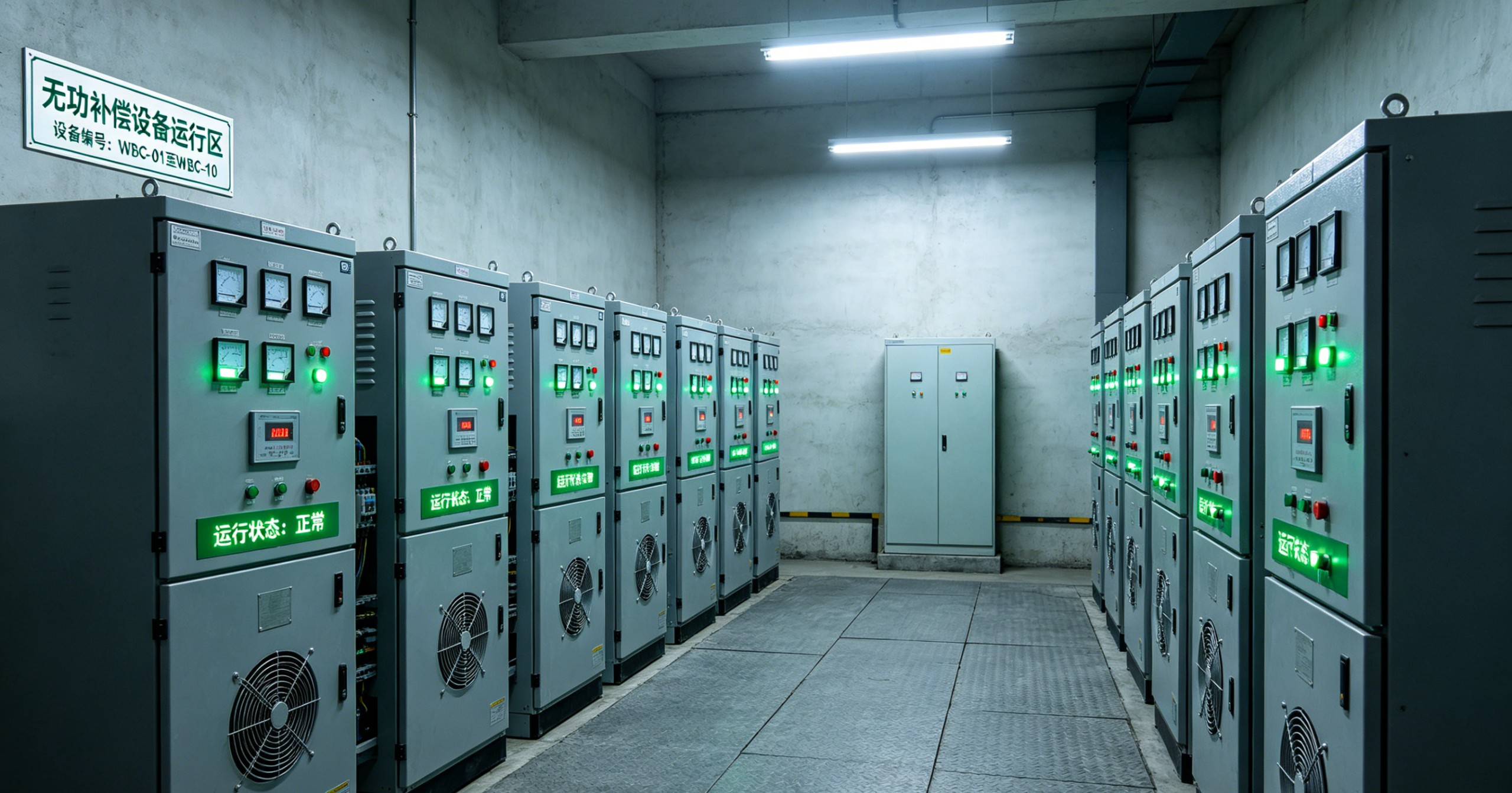
Factories extensively use equipment such as motors, air compressors and generators during operation. If the equipment power factor falls below 0.85, PLN will impose direct electricity tariff penalties — a compliance cost easily ignored by foreign enterprises.
Per industrial power standards, high-power switching power supplies (≥1kW) are recommended to maintain a power factor of no less than 0.95. Enterprises shall complete power distribution system design and install reactive power compensation equipment at the initial factory construction stage to meet power factor requirements and avoid additional fines.
Meanwhile, Indonesia is accelerating the transition to renewable energy. Enterprises that take initiative to upgrade energy-saving equipment and optimize power management will gain positive recognition in government communications and project approval procedures.
VI. Practical Recommendations: Help Enterprises Precisely Control Power Costs
Combining Indonesia’s power market policies and practical experience, three core suggestions are provided for Chinese enterprises investing in factory construction in Indonesia to avoid cost risks and optimize operational efficiency:
- Prioritize Power Condition Verification in Site Selection: Confirm existing power capacity, tariff type, industrial power access eligibility and capacity expansion feasibility before negotiating rent and other cooperation terms. Give priority to industrial zones with stable power supply and complete supporting facilities such as the Jakarta-Bandung Industrial Corridor and Semarang, to prevent production disruptions from power issues in the later stage.
- Precisely Match Power Capacity: Scientifically calculate required power capacity based on the total load of production equipment. Avoid production bottlenecks caused by insufficient capacity and waste of minimum charges from excess capacity. Dynamically adjust capacity applications according to actual load during the trial production period.
- Prioritize Industrial Park Power Supply: Industrial parks feature stable power supply, convenient capacity expansion and standardized tariffs. Some special economic zones in parks also offer preferential power tariff policies. This model is far superior to converting residential power to commercial or industrial use, effectively reducing power supply risks and costs.
In conclusion, the unique characteristics of Indonesia’s electricity tariff system require enterprises to incorporate power cost control into core early-stage planning for factory investment. Current stable short-term Indonesian electricity tariffs create favorable conditions for corporate budgeting. By accurately mastering core rules including power capacity selection, minimum electricity charges and meter types, and optimizing decisions based on production needs, enterprises can effectively avoid electricity tariff pitfalls, reduce operational costs, and lay a solid foundation for long-term development in Indonesia.
