
With the deepening of bilateral cooperation between China and Indonesia, Indonesia has become a preferred destination for Chinese enterprises expanding overseas. Its Free Trade Zones (FTZ) and Special Economic Zones (SEZ) attract widespread attention from enterprises thanks to generous preferential policies. Many enterprises planning overseas expansion confuse the differences between the two, thus missing optimal layout opportunities. This article clarifies the overview, core distinctions and compliance reminders of FTZs and SEZs to provide clear guidelines for enterprises going global, and briefly introduces the advantages of Wonderbase Industrial Park.
I. Basic Overview of FTZ and SEZ
Both are official special economic areas established by the Indonesian government with clear legal status and policy support, yet they differ greatly in core positioning and suit diverse corporate needs:
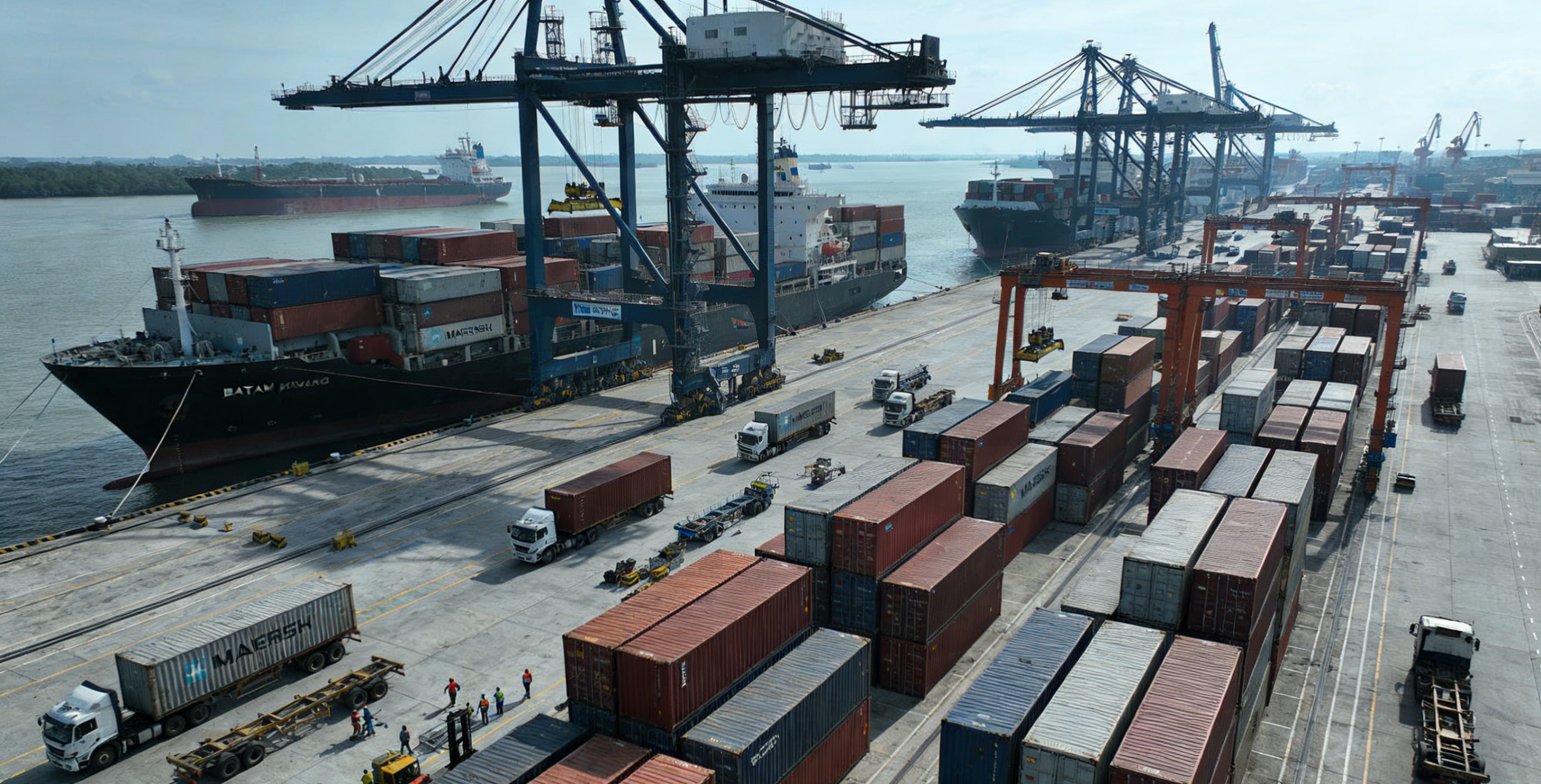
FTZ (Free Trade Zone): Established in accordance with Indonesian government regulations on free trade zones and free ports. Its core positioning is to build a convenient hub for trade and logistics, focusing on improving the efficiency of goods circulation and reducing tax burdens. It covers industries including manufacturing, trade and logistics, and preferential policies are only applicable to businesses within specified scopes. Batam Island, adjacent to Singapore, is a typical representative and an ideal location for warehousing, logistics and re-export trade.
SEZ (Special Economic Zone): Designated by Indonesia’s central government. At present, 25 SEZs have been completed nationwide, with another 6 to be added in 2026. It focuses on attracting industrial investment and driving the development of specific industrial clusters, featuring comprehensive investment incentive policies. Each SEZ has a defined industrial orientation, distinguishing “main business activities” from “other business activities”. Only main businesses are eligible for core tax and related preferential benefits, making SEZs premium carriers for long-term settlement of manufacturing and intensive processing enterprises. Wonderbase Industrial Park is located within an SEZ, empowering settled enterprises by leveraging the policy dividends of special economic zones.
II. Detailed Analysis of Core Differences between FTZ and SEZ
The disparities in preferential policies stem from their divergent core positioning. Key differences in three major dimensions — taxation, customs administration, land and licensing — are sorted below for targeted corporate matching:
(1) Tax Preferences: SEZs for Long-term Investment, FTZs for Circulation Tax Reduction
- SEZ: Boasting comprehensive incentives tailored for long-term industrial investment, ideal for manufacturing enterprises with long-term layout plans. Enterprises engaged in qualified main businesses with capital investment can enjoy a corporate income tax holiday of 10 to 20 years (the higher the investment amount, the longer the exemption period), followed by an additional 2-year 50% tax reduction. Preferential rates apply to income tax and local fees for land transactions and leasing. Highly skilled foreign professionals can access personal income tax benefits, helping enterprises attract top talents. Leveraging the SEZ tax policies, Wonderbase Industrial Park provides targeted support for settled enterprises to secure relevant incentives and cut operating costs.
- FTZ: Preferences concentrate on goods circulation with limited corporate income tax concessions. The core advantage lies in the exemption of value-added tax for transactions of goods and services inside or entering the FTZ, applicable only to restricted industries such as manufacturing, trade and logistics. Enterprises need to verify project eligibility in advance.
(2) Customs Facilitation: SEZs Serving Production, FTZs Serving Circulation
- SEZ: Customs benefits are designed to meet industrial production demands. Enterprises are entitled to tariff exemption or deferred payment on imported production equipment and raw materials, and are required to establish an inventory management system interconnected with customs systems. Capital goods imported during the construction phase enjoy full tariff exemption, while incentives during the operation phase focus on raw materials and auxiliary supplies, perfectly catering to the production needs of manufacturing enterprises.
- FTZ: Prioritizing efficient goods circulation. Overseas goods entering the FTZ are exempted from import tariffs with simplified customs clearance procedures and no complicated approval processes, making FTZs more suitable for circulation businesses such as warehousing and re-export trade.
(3) Land and Licensing: SEZs for Permanent Settlement, FTZs for Circulation Operations
- SEZ: Optimized for enterprises’ long-term settlement. Procedures for land acquisition, right renewal and extension are greatly simplified; complicated approval processes are waived upon submission of land use plans. If the SEZ has formulated park construction guidelines, enterprises are exempt from separate application for land utilization and building permits, shortening approval cycles and enabling rapid corporate settlement.
- FTZ: Limited conveniences in land and licensing. Only trade-related permits are streamlined to guarantee efficient goods circulation, with no additional land use incentives, suitable for enterprises that do not require long-term land occupation.
III. Key Compliance Reminders
Enterprises deploying in Indonesia’s FTZs or SEZs shall prioritize the following compliance requirements to mitigate operational risks:
- SEZs feature comprehensive policies and stringent compliance standards. Enterprises must strictly differentiate between “main business activities” and “other business activities”, and standardize financial accounting and tax declaration to avoid disqualification from preferential benefits due to improper business classification. Wonderbase Indonesia Industrial Park assists settled enterprises in sorting out business categorization and meeting compliance requirements.
- FTZ compliance focuses on customs supervision. Enterprises need to establish a sound inventory management system to ensure goods circulation complies with customs regulations and prevent penalties arising from customs clearance violations.
- Regardless of choosing an FTZ or SEZ, enterprises shall confirm that their projects comply with industrial restrictions of the zone and strictly abide by Indonesian laws and regulations. Partnering with professional industrial parks (e.g., Wonderbase Industrial Park) can reduce compliance costs.
IV. Introduction to Wonderbase Industrial Park, Batang National Special Economic Zone, Indonesia
Wonderbase Industrial Park is situated within the Batang Special Economic Zone in Central Java, Indonesia. Covering a starting area of 98 hectares, 10 factory buildings in the first phase have been delivered and put into operation successively. As a core sector of Batang SEZ dedicated to building a systematic manufacturing supporting system, the park welcomes enterprises from manufacturing, logistics and supply chain, green building materials, medical devices, digital economy and other industries. Settled enterprises can enjoy one-stop landing services provided by the project team and legally access multiple special economic zone dividends.
Indonesian President Prabowo Subianto attended the unveiling ceremony of Batang Special Economic Zone and expressed his vision to build it into “Indonesia’s Shenzhen”. Covering a total planned area of 4,300 hectares, Batang SEZ is located at the industrial core node of Indonesia, with an extensive land, sea and air transportation network enabling efficient logistics coverage across Southeast Asia. The zone features well-developed infrastructure and has entered the trial operation stage. Projects for inland port and railway connection are underway, and the completed inland port will be directly linked to railways. Roads inside the zone seamlessly connect to the Trans-Java Toll Road, with exits leading to Indonesian national highways.
10 apartment buildings in the industrial-city complex have been completed to provide comfortable accommodation and supporting services for employees of settled enterprises. The one-stop service center and activity center of the zone are operational, with numerous commercial service providers stationed, including banks, electric vehicle charging stations, hospitals and hotels.
Prioritizing environmental protection, the zone has built a waste management center, a water treatment plant, an urban forest park and other environmental facilities, striving to develop into a green and sustainable industrial hub. Enterprises settling here will be neighbors of industry giants including KCC Glass, SEG Solar and Laiyi Footwear.
Factory buildings in the park are available for lease and sale, with customized construction services tailored to corporate demands. Standard factories in the 40-hectare initial zone are equipped with independent guard rooms and power distribution houses, enclosed walls with drainage ditches on both sides, access roads connecting front and rear transport routes, and backyard exits linking inter-factory roads for convenient transportation. Single-story steel structure factories feature spacious interiors, accommodating heavy-duty equipment installation and multi-layer construction. Light industrial standard factories are fully furnished: the ground floor adopts concrete structure meeting load standards for light industrial equipment, while the second floor is steel structured, suitable for light production, office use and light warehousing.
We sincerely invite global partners for inquiries, business negotiations and on-site inspections!
