
In Huadu, Guangzhou, before the morning mist over the Prince Mountain foothills lifts, the steward at North Track Camping No.1 Camp has begun inspecting the tent guy lines. Meanwhile, 4,500 kilometres away in Batang Regency, Central Java Province, Indonesia, the rumble of pile drivers mingles with tropical birdsong on the grounds of Batang Industrial Park. These two seemingly unrelated scenes belong to the industrial landscape of one single enterprise.
WANXINDA (Guangzhou) Technology Products Co., Ltd., a private enterprise rooted in Huadu for 28 years, started as an original equipment manufacturer (OEM) of IT accessories and has now grown into a multinational corporation spanning manufacturing, cultural tourism, medical protection, and industrial park operation. Its growth trajectory aligns precisely with four critical milestones in the transformation of China’s private enterprises: from OEM to brand building, from manufacturing to service-oriented operations, from local to global expansion, and from commercial profit to co-creation of social value.
First Transformation: Shedding the Label — A Brand Awakening for Contract Manufacturers
In 1995, when Chen Riling founded WANXINDA in Huadu, China was emerging as the “world’s factory”. While the OEM model secured orders quickly, it also meant meagre profits and a lack of bargaining power. “We once manufactured bags for top international brands, and our quality was widely recognised, yet consumers never knew who the maker was,” Chen recalled. The turning point came in the early 2000s. The company resolved to build its own brand, assembled an R&D team, and invested over 5% of its annual revenue in technological innovation. Research and development of functional fabrics became the breakthrough: waterproofing, antibacterial properties, lightweighting — one patent after another moved from the laboratory to the production line.
The real milestone arrived in 2017, when WANXINDA became the exclusive supplier of official bags for heads of state at the BRICS Summit in Xiamen. “This was more than an order; it was a vote of confidence in the quality of Chinese manufacturing,” Chen stated.
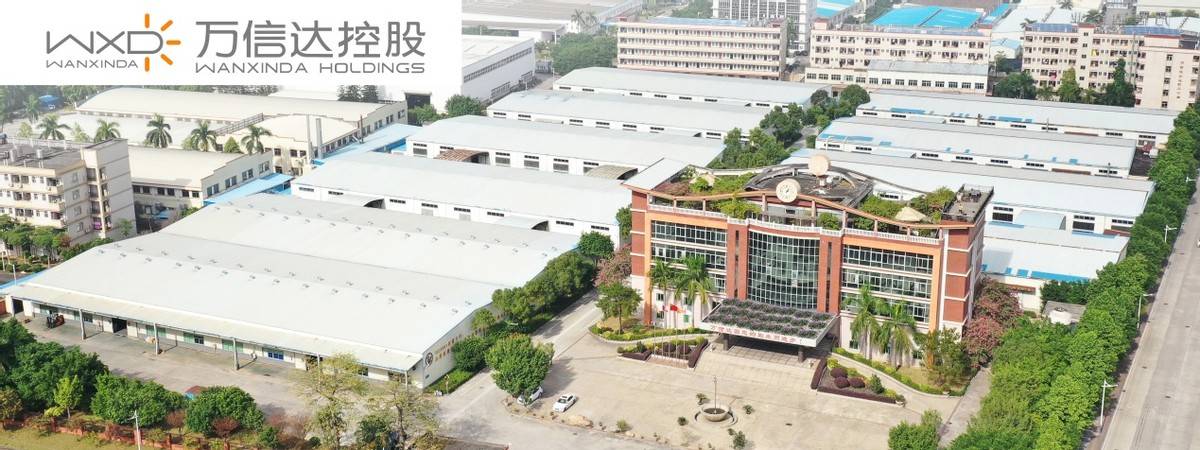
Photo caption: A bird’s-eye view of WANXINDA Technology Products Factory in Huadu, Guangzhou.
“WANXINDA’s journey from OEM to ODM and then to OBM serves as a typical example of upgrading for traditional manufacturing enterprises,” commented Lin Jiang, Professor of Economics at Lingnan College, Sun Yat-sen University. “It proves that contract manufacturers need not remain stuck at the low end of the value chain; with sustained technological investment and brand building, they can also climb into the high-end market.”
Second Transformation: Embracing Lucid Waters and Lush Mountains — A Cultural Tourism Experiment for Manufacturers
In 2018, as WANXINDA’s bag business grew steadily, Chen Riling turned his gaze to the mountains and rivers of Huadu. Straddling the Tropic of Cancer, the district boasts a forest coverage rate of over 36%, yet its tourism resources were scattered and lacked strong IP.
“Back then, many people could not understand why a bag maker would venture into camping,” admitted a relevant official of Huadu District Tourism Association. But WANXINDA’s logic behind cultural tourism was consistent with its manufacturing mindset: systematic integration, standardised services, and experiential innovation.
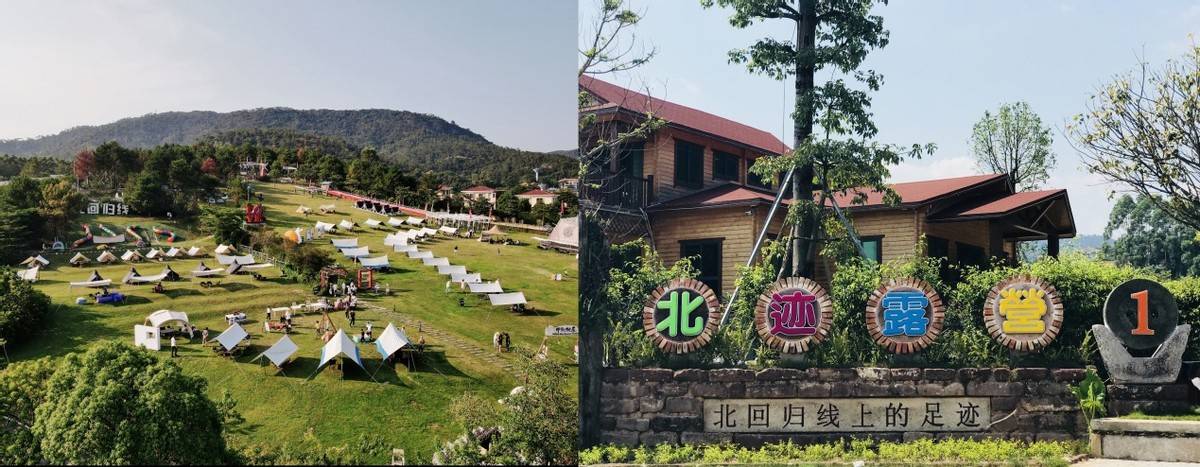
Photo caption: North Track Camping No.1 Camp, developed by WANXINDA, is located at No. 116 Fubin Road, Huadu District.
The 230-kilometre “Stunning Huadu” fitness trail invested and built by the enterprise connects more than 20 villages and scenic spots across seven towns and subdistricts, effectively creating an “outdoor product line”. The North Track Camping project, meanwhile, acts as an “immersive experience product” integrating accommodation, catering, entertainment, education and other formats.
This cross-border expansion brought multi-dimensional returns: the cultural tourism segment received over 500,000 visitors annually, lifting the incomes of surrounding villagers by more than 30%; unexpectedly, the outdoor business also fed back into the core bag business, spawning new product lines such as mountaineering packs and camping gear. “Many of our camping guests have become bag customers, trusting our understanding of outdoor scenarios,” said the head of WANXINDA’s Cultural Tourism Division.
Third Transformation: An Extraordinary Transition Under the Pandemic “Stress Test”
On the second day of the Lunar New Year in 2020, after counting the last batch of fabrics in the warehouse, Chen Riling made a tough decision: retrofit production lines to switch to mask manufacturing.
At that time, mask-making machines had soared to ten times their usual price, and melt-blown fabric was scarce despite high prices. Leveraging years of supply chain resources, WANXINDA secured prototype machines from Dongguan, coordinated raw materials in Fujian, and completed production line debugging within 72 hours. More crucially, it stood by ethical principles: while masks were being speculated at several yuan each on the market, WANXINDA insisted on pricing them at 0.6 yuan and imposed purchase limits.
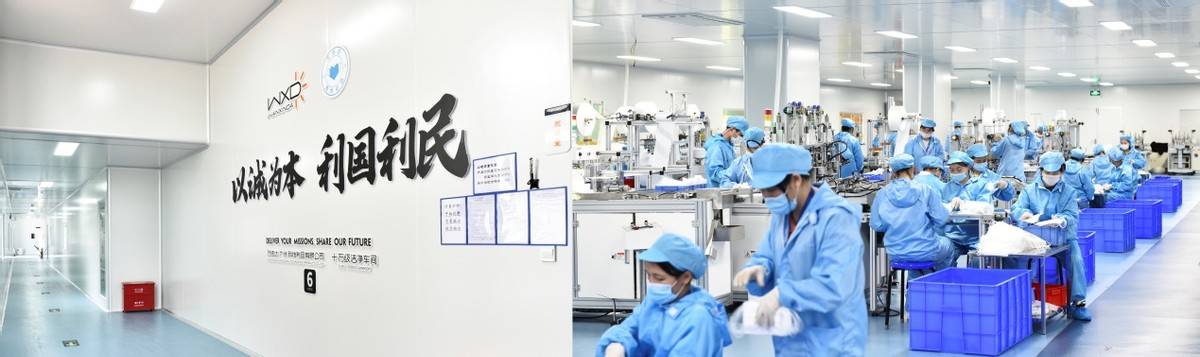
Photo caption: Workers at WANXINDA’s mask factory working around the clock during the pandemic.
“For those five months, we never thought about profits; we were actually running at a loss on the books,” Chen acknowledged. “But in an emergency, an enterprise should act as a ‘backup organ’ of society, ready to activate when needed.” Statistics show that during the pandemic, WANXINDA supplied over 300 million masks in total, covering more than 2,000 enterprises and public institutions in Guangdong Province.
This “extraordinary transformation” inadvertently opened a second growth curve. The company obtained medical device manufacturing qualifications in the process, and its medical protection products are now exported to more than 20 countries. “A crisis is like a mirror: it tests an enterprise’s social responsibility as well as the resilience and toughness of its organisation,” noted Chao Gang, Professor at the School of Business Administration, South China University of Technology.
Fourth Transformation: Going Global 3.0 — From “Going Out” to “Building a Platform”
When WANXINDA launched its industrial park project in Batang, Indonesia in 2019, Chinese manufacturing going global was no longer a novelty. Unlike other enterprises, however, WANXINDA adopted a “platform-based globalisation” strategy: it not only built its own factory but also planned a 6-million-square-metre industrial park to attract upstream and downstream industrial chain players.
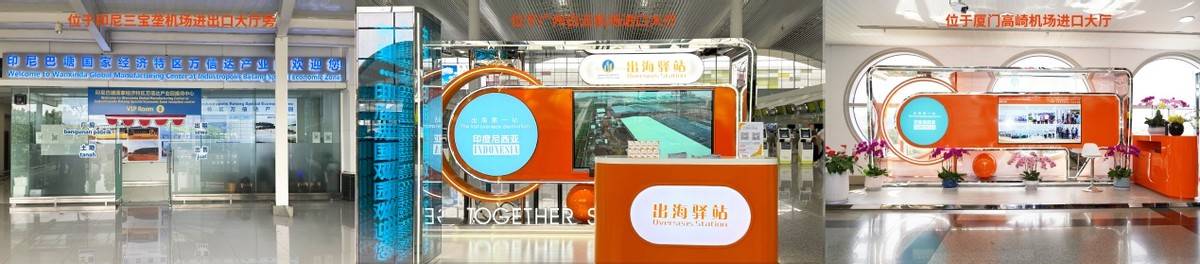
Photo caption: To facilitate Chinese enterprises going global, WANXINDA has set up “Globalisation Service Stations” at the arrival halls of Semarang Airport (Indonesia), Guangzhou Baiyun International Airport, and Xiamen Gaoqi International Airport.
“Individual enterprises going global face multiple barriers including language, law and culture; we aim to build a ‘safe zone’,” Chen explained. The park provides one-stop services such as standard workshops, policy consultation, financial support, logistics and customs clearance, and has so far attracted 32 enterprises from Guangdong, Fujian and other regions, covering industries including textiles, hardware and electronics.
This model has gained recognition from Indonesian authorities. Edhi Prasetiyo, Head of the Investment Board of Central Java Province, stated: “WANXINDA brings not only Chinese capital but also mature industrial cluster experience, which is of great significance to the local industrialisation process.”
Back in Huadu, WANXINDA has simultaneously built “Globalisation Service Stations” at the arrival halls of Guangzhou Baiyun International Airport, Xiamen Gaoqi International Airport, and next to the customs area of Semarang Airport in Indonesia, offering pre-departure training and resource connection services for domestic enterprises. This forms a dual-node model of “domestic service base + overseas industrial park”. “This marks a new stage in the globalisation of Chinese private enterprises — an upgrade from product export and capital export to export of management models and industrial ecosystems,” analysed Gao Lingyun, Research Fellow at the Institute of World Economics and Politics, Chinese Academy of Social Sciences.
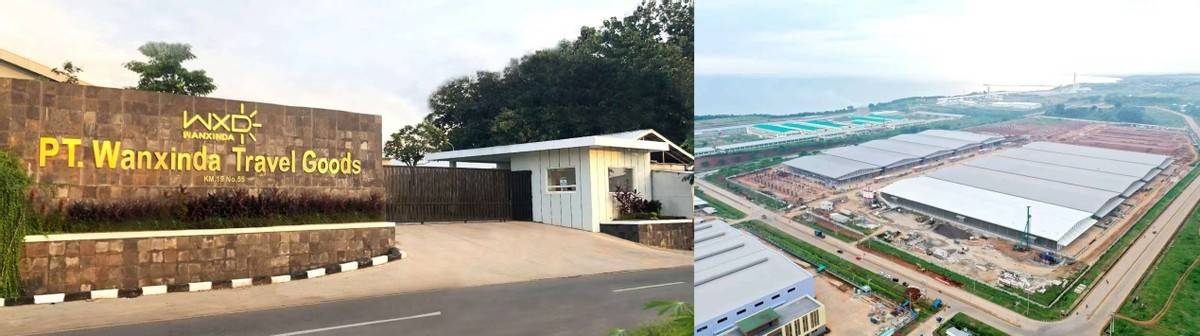
Photo caption: WANXINDA Industrial Park in the Batang Economic Zone, Jakarta, Indonesia.
The Unchanging Core Amid Deep Transformations: Entrepreneurship and Local Symbiosis
Reviewing WANXINDA’s four transformations, a core question emerges: what is the internal driving force behind the enterprise’s continuous transformation?
Hanging in Chen Riling’s office is a calligraphy work inscribed with “Benefit others before benefiting oneself”. This is not only a personal belief but also internalised into the enterprise’s decision-making logic: prioritising villagers’ employment when transforming into cultural tourism, adhering to affordable pricing during pandemic production, and focusing on local hiring when building overseas parks.
“When private enterprises develop to a certain stage, they must answer the question of ‘for whom value is created’,” Chen said. “Profits keep an enterprise alive, but only creating social value makes it needed and respected.”
“What makes WANXINDA special is that every transformation is deeply embedded in regional development needs,” said a relevant official of Huadu District Development and Reform Bureau. “From manufacturing upgrading to rural revitalisation, from emergency support to global layout, the enterprise’s growth is highly aligned with regional strategies.”
Insights: How Can Chinese Private Enterprises Navigate Economic Cycles?
Currently, China’s economy is in a critical period of transformation and upgrading, and private enterprises face a new operating environment. WANXINDA’s 28 years of exploration may offer some insights:
First, the core business is a “stabiliser”, not a “ceiling”. WANXINDA has always taken manufacturing as its foundation; even when expanding into cultural tourism and medical businesses, its operational logic and supply chain capabilities stem from manufacturing experience. Yet a solid core business does not mean self-imprisonment — enterprises need to establish a “strategic radar” to seek opportunities in related fields.
Second, transformation requires “value-based navigation”. Business decisions depend on the market in the short term but on values in the long run. The pandemic production shift seemed “unprofitable” yet earned social trust; cultural tourism investment has a long payback period but built emotional brand connections. These hard-to-quantify assets are precisely the soft power that enables enterprises to navigate cycles.
Third, globalisation demands a “symbiosis mindset”. Chinese enterprises going global once went through a phase of low-price competition; today, they should shift toward value co-creation. WANXINDA’s practice in Indonesia shows that sustainable development is only possible by helping local areas build industrial capacity, create jobs and integrate into communities.
Fourth, enterprises are “partners” in regional development. The relationship between private enterprises and local governments is not simply that of policy beneficiaries and implementers, but rather co-planners and co-builders. WANXINDA’s integrated model of industry, culture and tourism in Huadu provides a reference path for enterprises to participate in high-quality regional development.
At the 28th anniversary milestone, WANXINDA still faces challenges: how to achieve efficient collaboration across diversified businesses? How to manage risks in global operations? How to ensure a smooth intergenerational succession? These are questions the enterprise must answer in its next phase.
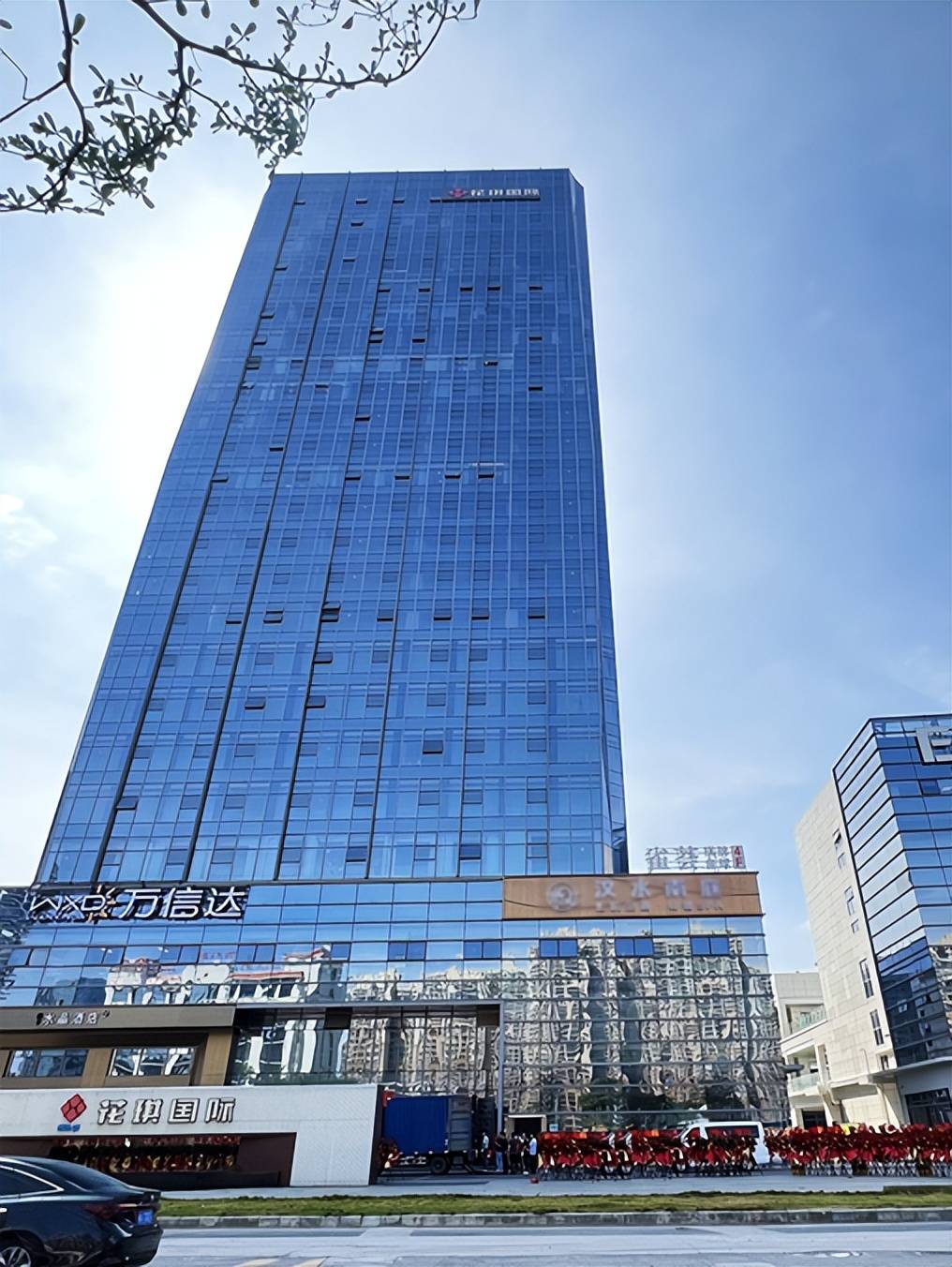
Photo caption: WANXINDA’s office building at Huaqi International Plaza in central Huadu District, Guangzhou.
Nevertheless, this enterprise that started in a Huadu workshop has proven over 28 years that the boundaries of a manufacturing enterprise extend far beyond factory walls, and the stage for Chinese enterprises stretches far beyond national borders. Its story continues — in every bag sold worldwide, under every starry tent along the Tropic of Cancer, and in every rising sun over Batang Industrial Park.
