
Speech Date: 20 May 2026 (Indonesian National Awakening Day)
Venue: Nusantara Hall, Indonesian House of Representatives, Jakarta
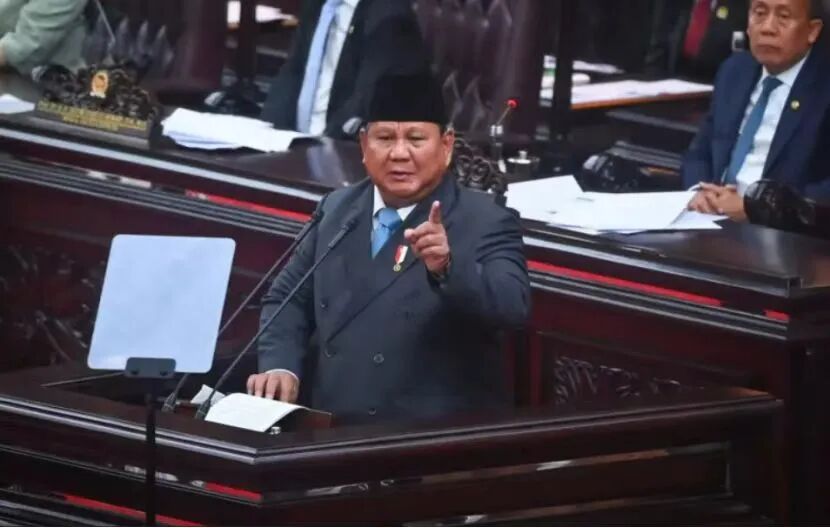
Speaker: President Prabowo Subianto of Indonesia
Core Theme: Unveiling the 2027 Macroeconomic Framework for the State Budget (KEM) and Outline of Fiscal Policy (PPKF), specifying annual economic targets, reform priorities and people’s livelihood support measures
I. Opening Statement: Fiscal Policy as a Core Instrument for National Development and Wellbeing
On the historic occasion of Indonesia’s National Awakening Day, President Prabowo attended the plenary session of the House of Representatives to formally submit the 2027 Macroeconomic Framework and core fiscal policy blueprint before the Vice President, parliamentary leaders at all tiers, cabinet ministers, all lawmakers and the Indonesian public at large.
He stressed that the fiscal blueprint is far more than a set of statistical figures; it serves as Indonesia’s pivotal development vehicle to safeguard citizens’ legitimate interests, consolidate economic fundamentals and secure decent livelihoods for all Indonesians. The incumbent administration’s ultimate development vision is to deliver full national food security, energy independence and comprehensive economic sovereignty, and advance sustainable national growth underpinned by a sound fiscal framework.
II. Quantified Core Economic and Livelihood Targets for 2027
Against a volatile global geopolitical landscape, the Indonesian Government has adopted a prudent yet proactive development stance to finalise key 2027 benchmarks spanning economy, livelihoods and industries, alongside medium-to-long-term goals targeted for 2029 to form a phased growth roadmap, with detailed targets outlined below:
- Economic Growth: Annual GDP growth target set between 5.8% and 6.5%, laying groundwork to hit an ambitious 8% growth rate by 2029
- Fiscal Revenue & Spending: State fiscal revenue to account for 11.82%–12.40% of GDP; total fiscal expenditure to make up 13.62%–14.80% of GDP
- Fiscal Deficit: Capped rigorously within 1.80%–2.40% of GDP to secure fiscal sustainability
- Exchange Rate & Inflation: Indonesian Rupiah pegged at IDR 16,800–17,500 per US dollar; inflation contained at a moderate 1.5%–3.5%
- Financial Indicator: Yield on 10-year Indonesian government bonds maintained between 6.5% and 7.3%
- Energy Sector: Indonesian crude oil reference price fixed at USD 70–95 per barrel; daily crude output targeted at 602,000–615,000 barrels; daily natural gas production converted into oil equivalent at 934,000–977,000 barrels
- Inclusive Livelihoods: Poverty rate lowered to 6.0%–6.5%; open unemployment capped at 4.30%–4.87%; formal employment share raised substantially from 35.00% to 40.81% to upgrade employment composition
- Income Equality: Gini coefficient improved to 0.362–0.367 to curb excessive wealth concentration among privileged groups and narrow the rich-poor divide
- Human Capital: Human Capital Index lifted to 0.575 to unlock demographic dividend via improved workforce quality
- Grassroots Industrial Support: Farmer Welfare Index targeted at 0.8038; launch of the Red-and-White Fishing Village Programme to build 5,000 standardised fishing villages in three years, with 1,386 completed in 2026, all equipped with ice-making facilities to preserve fresh catch and secure fishermen’s core earnings
III. Guiding Development Principle: Building a Solid Economic Foundation Through Social Justice
President Prabowo noted that social equity constitutes a prerequisite for shared economic prosperity. Indonesia’s competitive edge derives not only from its strategic geographic location and abundant natural resources but crucially from its people. National development is rooted in equal legal protection for every citizen, with priority given to safeguarding the rights of vulnerable and underprivileged communities to eliminate a skewed legal system that only benefits elites and affluent groups.
IV. In-depth Review: Structural Flaws Draining Indonesia’s Economic Wealth
During the address, Prabowo conducted a candid self-assessment of bottlenecks constraining Indonesia’s economic advancement. He recounted that from the 16th to 19th centuries, prolonged Dutch colonial exploitation siphoned massive natural resources from the Indonesian archipelago to amass enormous overseas wealth while inflating domestic per capita GDP artificially. Enshrined in Indonesia’s 1945 Constitution is the stipulation that all land, water and natural resources belong to the state, to be centrally managed for collective public benefit.
Reflecting on current realities, he posed a critical question: endowed with abundant natural resources, why has Indonesia lagged behind peers including the Philippines, Mexico and Malaysia in economic governance outcomes? Despite steady GDP expansion in recent years, ordinary Indonesians have failed to reap commensurate benefits from growth.
Official data shows Indonesia’s economy expanded by an aggregate 35% over the past seven years, which should have translated into broad-based wealth growth for citizens. Nevertheless, most Indonesians have not shared the fruits of economic expansion. Decades of persistent merchandise trade surpluses, with export volumes consistently outstripping imports, should have insulated the country from economic crises. Instead, systemic domestic loopholes and chronic capital flight remain the primary drag on national development.
V. Groundbreaking Reforms: New Rules on Natural Resource Exports to Stem Capital Outflow
To plug institutional loopholes and halt sustained wealth drainage, the Indonesian Government has promulgated a Government Regulation governing the export of natural resource commodities, introducing two landmark reforms to restructure the resource export sector.
- Centralised State-led Export Regime for Strategic Resources: Palm oil, coal, ferroalloy and other pivotal strategic commodities fall under state oversight; all export transactions involving these goods must be settled and traded exclusively via designated state-owned enterprises as the sole official authorised platforms to standardise export channels.
- Crackdown on Malpractices in Cross-border Trade: Targeted enforcement against long-standing irregularities such as under-invoicing, transfer pricing and offshore forex diversion, which have caused trillions of rupiahs in annual state wealth losses, to formalise foreign trade and ensure full repatriation of resource-derived revenues.
Prabowo also singled out deep-seated corruption and inefficiency plaguing Indonesia’s customs administration. He recalled a historic episode where rampant customs graft once forced the country to outsource cargo inspection to foreign agencies, which unexpectedly boosted fiscal collections—a stark wake-up call. He emphasised sweeping customs overhaul as a core pillar of national economic reform to eradicate misconduct and enforce law-based administration.
VI. Balancing Government-Business and Labour-Employer Relations: Empowering Compliant Private Enterprises for Healthy Industrial Ecosystem
Prabowo clarified the reform agenda is not designed to suppress private businesses but to foster robust, law-abiding domestic private-sector champions. He commended homegrown multinationals such as Indofood and recognised the indispensable contribution of private enterprise to national economic progress.
Balancing labour relations and safeguarding market entities, the government has rolled out two-pronged supportive policies:
- For young generations: Integrate entrepreneurship education into university curricula and launch dedicated youth entrepreneurship credit programmes to nurture emerging domestic startups.
- For labourers: Encourage workers to acknowledge operational constraints facing enterprises while the government expands social security coverage to reduce household living burdens and indirectly cut corporate labour expenses. Temporary tax relief applications are available for financially distressed firms, with a call for joint public-private efforts to navigate global headwinds and avoid over-reliance on perpetual tax incentives.
VII. Historic Agricultural Breakthrough: Attaining National Food Self-sufficiency to Fortify Livelihood and Industrial Resilience
Amid lingering global food insecurity, Indonesia has achieved a landmark agricultural milestone: the four-year food self-sufficiency target set by the incumbent administration was fully accomplished in merely one year. As of 10 May 2026, national grain reserves have exceeded 5.3 million tonnes, filling all state-owned silos and prompting additional off-site warehouse leasing for stockpiling, solidifying Indonesia’s food security buffer.
A landmark pro-farmer policy has slashed domestic fertiliser prices by 20%, drastically lowering production costs for millions of agricultural households. With surplus domestic fertiliser output exceeding domestic demand, Indonesia now possesses capacity to export fertilisers to Australia, India, Brazil, the Philippines and other nations, marking a marked upgrade in overall agricultural competitiveness.
VIII. Development Outlook: Striving for Major-Economy Status While Upholding Reform Commitments
Closing his address, Prabowo laid out Indonesia’s long-term growth blueprint, citing projections from leading global economic institutions that Indonesia is poised to become the world’s fourth or fifth largest economy by 2045. Elevated global standing and international recognition have unlocked unprecedented development opportunities for the nation.
He urged national confidence in Indonesia’s major-economy aspirations without overconfidence. Moving forward, the government will persist in addressing domestic structural shortcomings, rooting out unfair economic practices and unlawful activities, and delivering transformative economic expansion through consistent reforms.
IX. Investment Implications for Chinese Enterprises Expanding into Indonesia
The parliamentary speech signals clear directions for Indonesia’s economic reform and opening-up, creating tangible opportunities for Chinese investors tapping into the Indonesian market and Southeast Asia at large, with key benefits detailed below:
- Stable macro fundamentals uplift investment security: Fixed targets for growth, exchange rate, inflation and fiscal deficit underpin robust economic fundamentals, mitigating macro risks for inbound investment. Stable financial and market conditions guarantee predictable project operation, fund settlement and profit repatriation for Chinese firms across new energy, infrastructure, manufacturing and agriculture, supporting long-term capital deployment.
- Regulated resource trade facilitates compliant industrial cooperation: Centralised state export oversight and anti-malpractice crackdown on strategic commodities including palm oil, coal and ferroalloy eliminate unregulated grey-market arbitrage, cutting compliance and competition costs for law-abiding Chinese enterprises. Chinese players engaged in resource trading, deep processing and new energy raw materials gain formal official channels to embed into Indonesia’s full resource industrial chain.
- Pro-business governance optimises operating environment for private and foreign investors: Presidential pledges to back compliant private businesses alongside tax relief and labour cost optimisation policies reflect strong pro-investment sentiment. A balanced regulatory framework for government-business and labour relations lowers market entry barriers and improves risk tolerance for Chinese private firms and foreign investors in manufacturing, services and emerging startups.
- Booming agricultural and grassroots infrastructure aligns with Chinese industrial strengths: Having secured food self-sufficiency, Indonesia is scaling up investments in fishing village construction, farm infrastructure, cold-chain logistics and livelihood projects. Chinese enterprises with mature technologies and production capacity in agricultural machinery, cold storage, engineering construction and fertiliser manufacturing stand well-positioned to bid for flagship projects such as the 5,000 Red-and-White Fishing Village development and national grain warehouse expansion, unlocking extensive cooperation potential.
- Youth entrepreneurship drive unlocks emerging-sector partnerships: State-backed youth startup financing and employment restructuring open new avenues for Chinese cross-border e-commerce, tech innovation, light manufacturing and digital economy companies. Partners can transfer technologies, build joint production capacities and co-create local brands via Indonesia’s budding youth entrepreneurial ecosystem to penetrate lower-tier Southeast Asian consumer markets.
- Long-term gains from Indonesia’s major-economy growth trajectory: With a concrete 2045 top-tier economy roadmap and sustained structural reforms, Indonesia boasts solid long-term growth visibility. As a core strategic partner, Chinese investors can capture upside from Indonesia’s industrial and consumption upgrading across traditional infrastructure, natural resources, renewable energy and people-centric industries.
Summary
The speech marks Indonesia’s strategic shift from extensive quantity-driven growth to high-quality, sovereign and regulated development, featuring improved policy transparency, standardised market rules and clarified investment demands. The current window represents a prime opportunity for compliant Chinese enterprises to enter Indonesia; projects aligned with local livelihood improvement and industrial upgrading will enjoy sustained policy backing and expansive growth prospects
