
I. Introduction: The Highly‑Visible “Big Cake” and the Hidden “Hard Nuts to Crack”
When discussing the Indonesian market, eye‑catching figures immediately come to mind: a population of nearly 300 million, a huge young consumer base, and steadily rising online transaction volumes. These hold enormous appeal for Chinese enterprises and investors chasing new growth trajectories.
Yet one reality is often overlooked: market size does not equate to replicable business success. Many enthusiastic early movers fall into one cognitive trap after another upon entering the market. They assume securing Jakarta means controlling the whole country; that signing one general agent unlocks full market access; and that approvals from the central government guarantee smooth implementation everywhere.
Nothing could be further from the truth. Indonesia’s real‑world business ecosystem is far more complex and fragmented than a neat, unified market blueprint. To establish solid roots here, we must look beyond surface‑level consumption data and dive into the underlying logic of how its society operates.
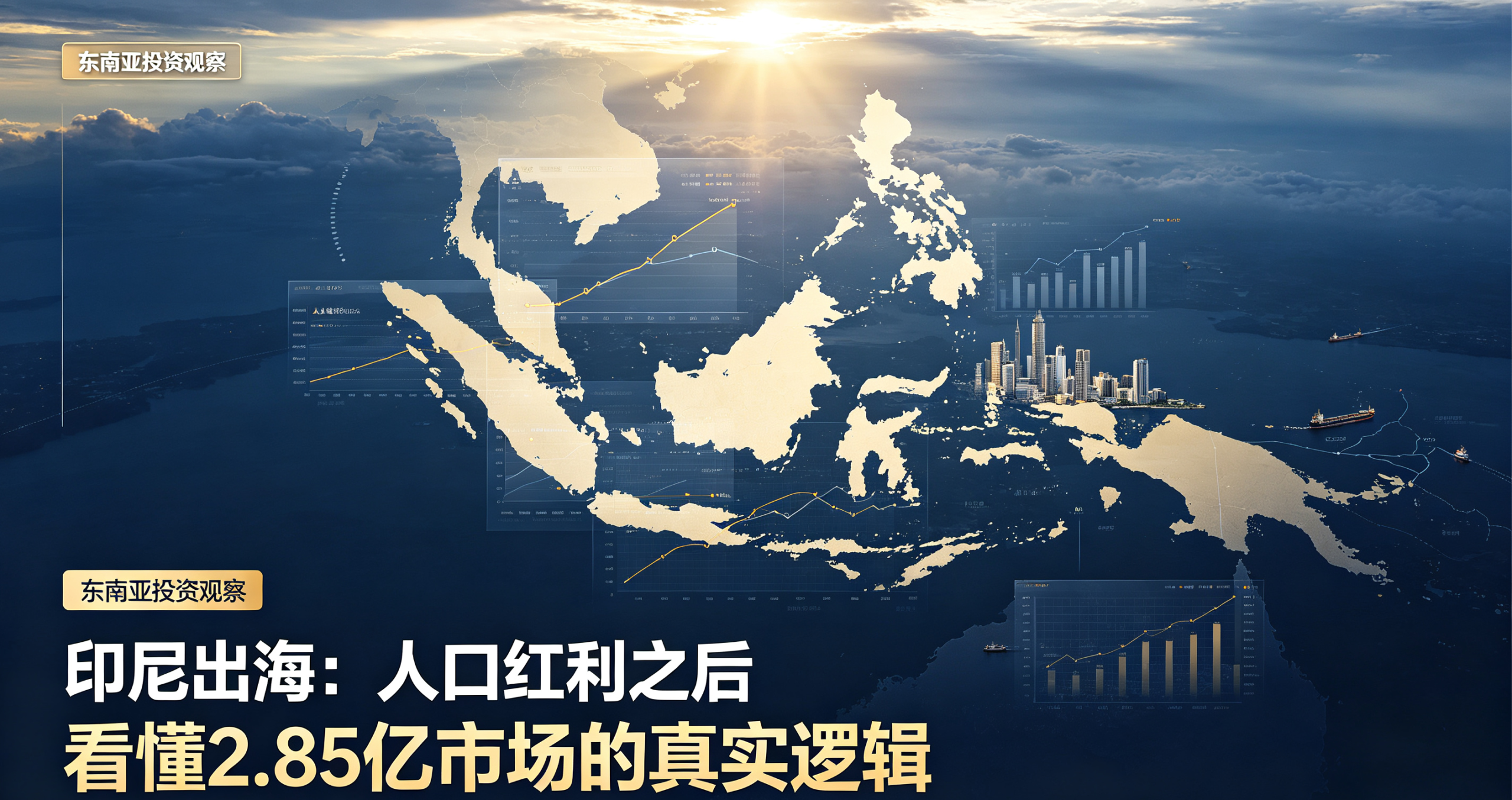
II. Decoding Indonesia’s “Archipelagic DNA”
Indonesia’s geography sets it apart. Home to more than 17 000 islands, its population is unevenly distributed. According to the latest data from Indonesia’s Central Statistics Agency, over half of its people live on Java Island. Diverse ethnic cultures, religious customs and local power structures intersect across the archipelago, forming an “archipelagic community” that is interconnected yet highly segmented.
This distinct societal character did not emerge out of nowhere. It has been shaped over centuries by three profound waves of cultural influx — essential lessons for all foreign investors.
III. Lesson One: A Millennium‑Long Trade History — Open‑Minded Reception and Local Adaptation
Through the ages, Indian civilizations, Muslim merchants, Chinese trade networks and European colonizers have all left their mark on this land. This has endowed Indonesian society with remarkable capacity for inclusion and assimilation.
Indonesia does not reject outside influences, yet it bears a defining trait: adopt, then reshape. No matter whether it is goods or business models, they must be reinterpreted and embedded within local social relations and cultural contexts before they can truly “take root”.
A common first mistake made by Chinese firms is to equate open market access with automatic acceptance among local consumers. They overlook a critical truth: product strength is merely an entry ticket. To win over the market requires thorough local adaptation of brand messaging, partnership frameworks and trust‑building mechanisms. Generic products may sell globally, but winning public support must be tailored to local conditions.
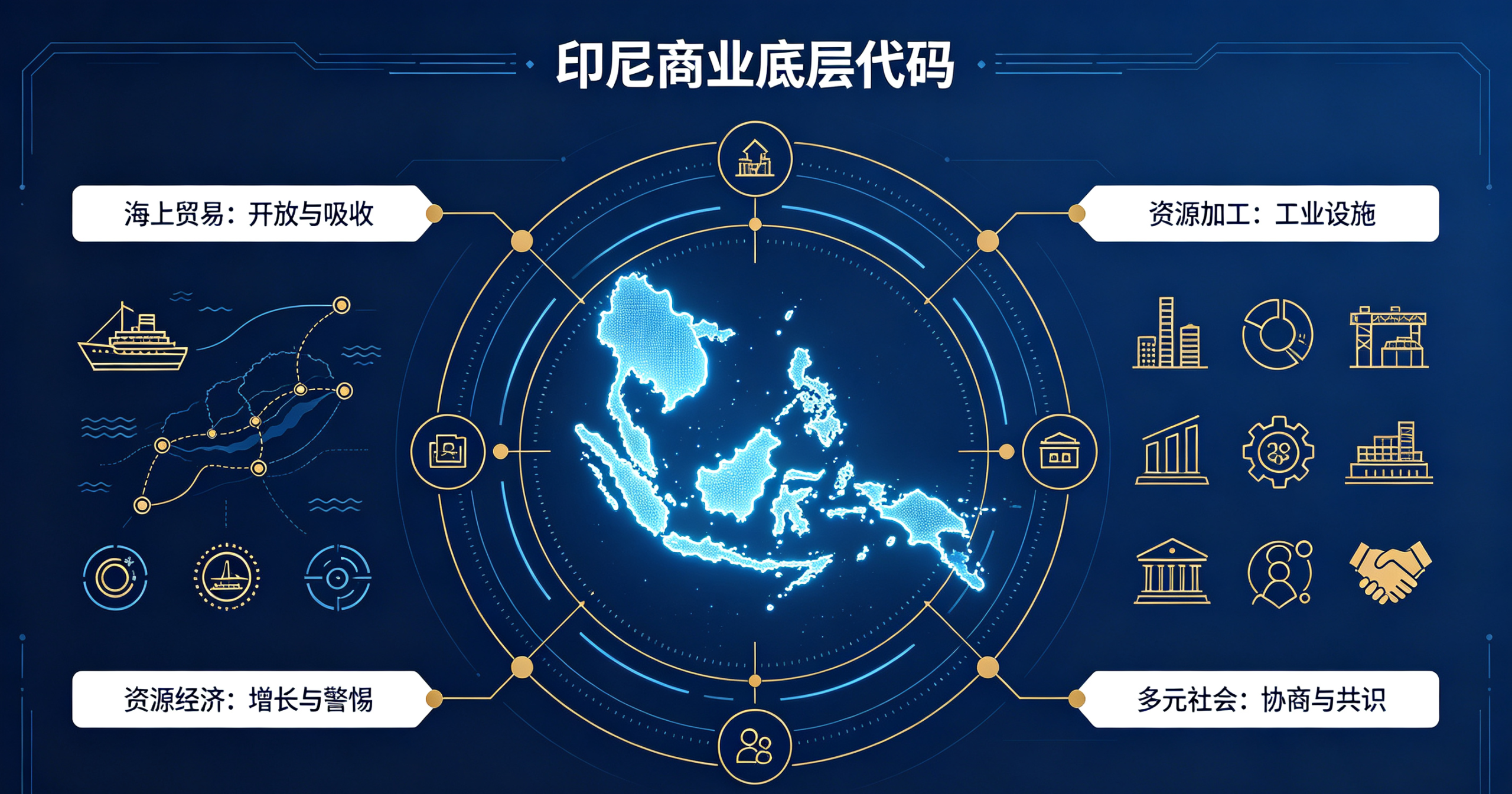
IV. Lesson Two: Colonial Exploitation of Resources — Sharing Growth, or Extracting Resources?
Indonesia is blessed with abundant mineral, energy, agricultural and forest resources. Nevertheless, its history of colonial plunder has instilled deep‑seated vigilance toward the motives of foreign capital.
This wariness manifests today in a core policy priority: “downstream industrialization”. Indonesia no longer wishes to serve solely as a low‑cost raw‑material exporter. By 2025, investments in downstream industries accounted for well over 30 percent of the country’s total realized annual investment. This clearly articulates national resolve: Indonesia welcomes deep‑level partners who bring complete industrial chains, generate local jobs, transfer core technologies and raise product added value.
Therefore, do not arrive with capital alone — come with a blueprint for shared growth. Your project proposal must clearly answer: beyond profits, what lasting value will your venture deliver for Indonesia?
V. Lesson Three: Pluralistic Social Structure — “I Say Yes” Does Not Equal “I Agree to You Proceeding”
“Bhinneka Tunggal Ika” (Unity in Diversity) is Indonesia’s national motto, reflecting a society marked by differences yet oriented toward consensus. For business practice, this plurality means projects seldom advance through top‑down directives. Instead, progress hinges on complex negotiations balancing the interests of multiple stakeholders.
Central‑government policies, local administrations, community leaders, religious organisations and industry associations — poor engagement with any of these groups can hinder project execution. A pivotal cultural concept in Indonesia is Gotong Royong (mutual cooperation). It emphasizes forceful unilateral pushing‑back is ineffective; genuine progress comes through full dialogue and balanced interests to foster a sense of collective participation.
This is where certain Chinese management styles focused on speed, efficiency and KPIs often face cultural friction. Receiving a verbal “yes” without genuine buy‑in and cooperation from underlying local networks means substantial ground‑breaking for your project may still be far away.
(End of Part One)
