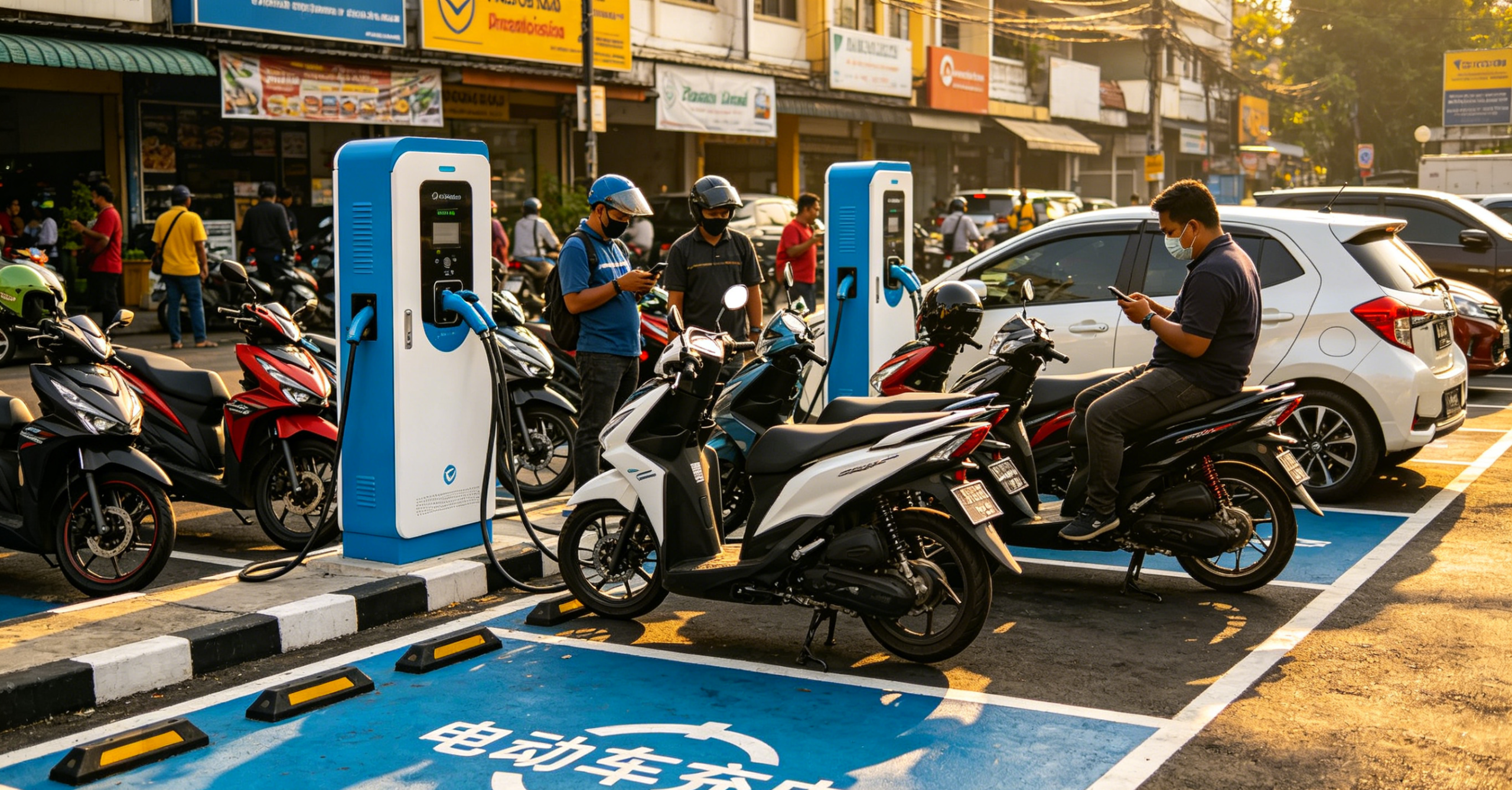
Starting from June 2026, Indonesia will officially roll out a new round of incentive policies for electric vehicles (EVs). Announced by Indonesian Minister of Finance Purbaya Yudhi Sadewa on May 12, 2026, the policy aims to address fluctuations in international oil prices, reduce reliance on fuel imports, and advance the development of the downstream industrial chain for domestic nickel resources. Regarded as one of the most definitive favorable policies for the new energy vehicle market across Southeast Asia to date, it carries important strategic implications for Chinese new energy enterprises seeking overseas expansion.
I. Core Policy Framework: Battery-Electric Focus and Tiered Incentives
According to releases from authoritative media including Indonesia’s national news agency and CCTV News, the new policy features a clear industrial orientation: it fully supports battery electric vehicles (BEVs) and excludes hybrid vehicles in principle.
1. Scale and Coverage of Subsidies
The Indonesian government plans to provide fiscal support for 100,000 electric four-wheel vehicles and 100,000 electric motorcycles in 2026. A fixed cash subsidy of 5 million Indonesian Rupiah (IDR) will be granted for each electric motorcycle. For four-wheel BEVs, tiered value-added tax (VAT) reductions will apply based on the local content rate and battery type.
2. Details of Tax Incentives
Indonesia’s standard VAT rate stands at 11%. The actual tax burden under the new policy depends on whether enterprises meet the local component content (TKDN) requirements and the type of batteries used.
|
|
|
|
|
|
|
|
|
|
|
|
|
|
|
|
Taking an electric vehicle priced at approximately 400 million IDR as an example, qualified enterprises can secure tax deductions of around 44 million IDR, which will greatly boost the market competitiveness of their products.
II. Key Market Access Indicator: TKDN Local Content Rate
TKDN is a core criterion for the Indonesian government to select long-term investors and a mandatory threshold for enterprises to access policy benefits.
1. Current Standards and Future Trends
Pursuant to policies issued by Indonesia’s Ministry of Industry, the TKDN rate for electric four-wheel vehicles and electric motorcycles must remain above 40% from 2022 to 2026. Enterprises failing to meet the standard will be ineligible for subsidies, and will face restrictions on vehicle sales and registration. Notably, the standard will be progressively raised: it will increase to 60% between 2027 and 2029, and further rise to 80% from 2030 onwards. This demonstrates Indonesia’s effort to push foreign enterprises to fully integrate into local supply chains by continuously raising market entry requirements.
2. Suggestions for Compliance
The TKDN calculation covers local manufacturing processes (stamping, welding, painting and final assembly), procurement of local components (such as seats, wiring harnesses and tires), and local battery pack assembly. For Chinese enterprises, establishing Complete Knock-Down (CKD) assembly plants is the most effective short-term solution. Partnering with capable local suppliers in advance is critical to building long-term cost advantages and ensuring policy compliance.
III. National Strategic Rationale Behind the Policy
This round of incentives is not merely a short-term stimulus measure, but a long-term strategy for Indonesia’s economic transformation.
1. Energy Security and Power Consumption
Indonesia’s Finance Minister stated that geopolitical conflicts in the Middle East have kept international oil prices high, exacerbating the country’s pressure on fuel imports. Promoting electrification in the transportation sector helps shift energy consumption from fossil fuels to electricity, thereby cutting foreign exchange spending. In addition, Indonesia’s state-owned electricity utility has surplus power generation capacity, and the growing adoption of EVs will improve the utilization rate of existing power infrastructure.
2. Downstream Development of Nickel Resources
As one of the world’s leading nickel producers, Indonesia is striving to move beyond raw material exports. The policy offers the highest level of subsidies for nickel-based batteries such as NMC batteries, directly supporting its strategic goal of developing a full downstream industrial chain for nickel resources.
IV. Strategic Recommendations for Chinese Enterprises
Against this policy window, Chinese new energy enterprises are advised to adopt the following compliance and market strategies:
- Prioritize the construction of CKD assembly lines. Given that a 40% TKDN rate is the prerequisite for full VAT exemptions, enterprises should abandon pure import trading models and accelerate the establishment of local assembly plants or cooperate with qualified local partners to swiftly meet local content requirements.
- Adhere to the BEV and nickel-based battery route. Hybrid vehicles receive no policy preferences in Indonesia, while BEVs equipped with nickel-based batteries qualify for the highest-tier subsidies. Product launches should be fully aligned with local resource endowments.
- Deepen integration into local supply chains. In view of the planned increase of the TKDN standard to 60%–80% in the future, securing local component suppliers via joint ventures or technical cooperation in advance will help defuse potential policy risks and underpin sustained and stable development in Indonesia.
The new policy marks the transition of Indonesia’s new energy vehicle market from the policy-driven introductory phase to a period of rapid growth. For Chinese enterprises that fully understand relevant regulations, deliver solid local operations and achieve in-depth localization, this presents a tremendous historic opportunity to expand business across Southeast Asia.