On April 8th, Indonesian President Joko Widodo formally responded to the 32% “reciprocal tariff” imposed by US President Donald Trump on Indonesian goods during an economic symposium, emphasizing that Indonesia must establish a foothold in the increasingly uncertain global situation and build an independent and self-reliant economic system.
Widodo clearly stated that Indonesia will not engage in tariff retaliation but will resolve the issue through diplomatic channels. He has instructed Coordinating Minister for Economic Affairs Airlangga Hartarto to travel to the United States for negotiations and to strengthen coordination with ASEAN countries to seek a unified regional response. This statement set the tone for the Indonesian government’s overall strategy in dealing with the tariff issue and foreshadowed a series of policy directions prioritizing “dialogue first.”
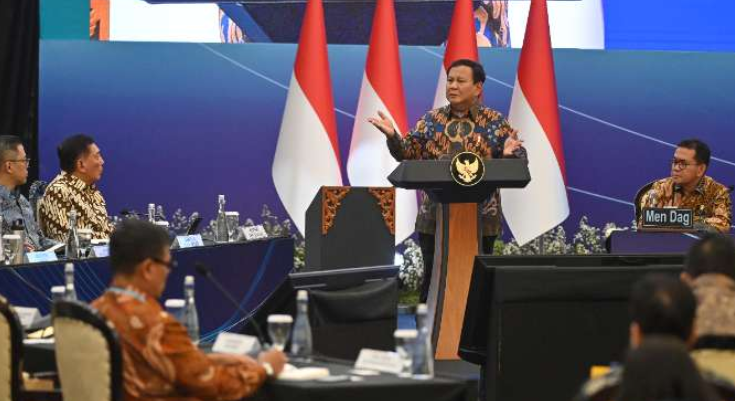
He further pointed out that despite the challenges, Widodo remains confident in Indonesia’s future, believing that the country can address this issue by exploring new markets and finding new ways out, especially in labor-intensive industries such as textiles, footwear, and furniture.
Indonesian Government’s Response Strategy: Enhancing Cooperation with the US
According to the plan, Indonesia will hold a meeting with leaders from several ASEAN countries on April 10th to discuss the tariff issue and strive for a unified stance. Airlangga Hartarto stated that Indonesia will push for a coordinated position with ASEAN countries. The Minister of Trade is also strengthening communication with countries such as Malaysia, Singapore, and Cambodia to ensure that ASEAN maintains a consistent position in dealing with the US tariff issue.
To strengthen its negotiating position with the US, the Indonesian government has formulated four main plans:
-
Restarting the Trade and Investment Framework Agreement (TIFA): Indonesia will push for the revision of the TIFA agreement signed in 1996, updating the issues of concern to ensure that the framework is more adapted to the current trade environment.
-
Easing Non-Tariff Barriers: In the information and communication technology sector, Indonesia will reduce local content requirements for US companies (such as GE, Apple, Oracle, and Microsoft) and re-evaluate the relevant restrictions on imports and exports from the US.
-
Increasing Imports from the US: Following Widodo’s instructions, Indonesia plans to increase imports of liquefied petroleum gas, natural gas, and agricultural products from the US. Airlangga Hartarto emphasized that this move will not increase the total volume of imports but will instead readjust the procurement structure to show goodwill towards the US and promote a more balanced bilateral trade.
-
Implementing Incentive Policies: Indonesia will enhance the international competitiveness of its exports to the US by lowering import tariffs, income tax on imports (PPh), and value-added tax (PPN), thereby optimizing the trade structure.
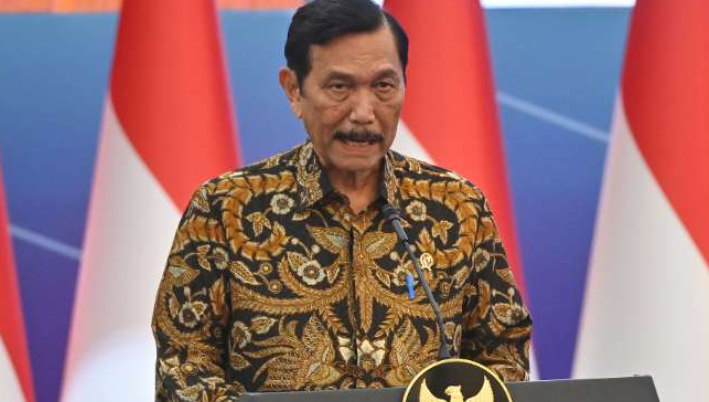
Indonesian Economic Committee Chairman Luhut: Limited Economic Impact of Tariffs
Luhut stated at the symposium that although the US has imposed tariffs on Indonesian goods, the impact on the Indonesian economy is relatively limited. He pointed out that, based on the simulation data during the Eid al-Fitr period, Indonesia’s exports account for only 23.8% of its GDP, and exports to the US make up only 10% of the country’s total exports. Therefore, the overall impact of the US tariff measures on Indonesia’s GDP is controllable.
Luhut emphasized that despite the complex global economic situation, Indonesia still has the ability to cope with external challenges, and past experience has shown that the country can find effective solutions when facing difficulties.
Finance Minister Sri Mulyani: Export Potential Remains
Sri Mulyani mentioned at the meeting that despite the US tariff increases, Indonesia still has certain relative advantages compared to other exporting countries such as Vietnam, Bangladesh, Thailand, and China.
She suggested that the government should seize the current situation and adjust its strategy to gain more export shares in fields such as electronics, clothing, and footwear.
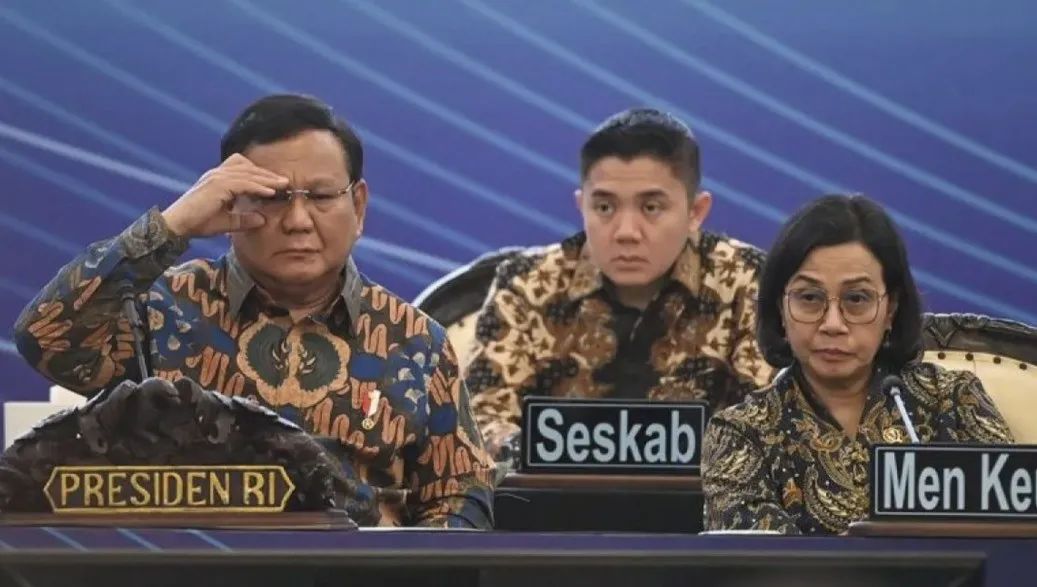
Coordinating Minister for Economic Affairs Airlangga Hartarto: New Market Opportunities
Airlangga Hartarto also pointed out that although Indonesia is facing a 32% tariff barrier, its tariff burden is still relatively low compared to other Southeast Asian countries. This advantage may open up new opportunities for Indonesia’s labor-intensive industries, such as textiles and footwear, to enter the US market. He estimated that if Indonesia can increase its market share in the US, it will bring considerable foreign exchange earnings to the country.
Overall, Indonesia has shown a proactive attitude in dealing with the challenge of the 32% US tariff increase, both diplomatically and economically. From pushing for a coordinated stance with ASEAN to engaging in trade dialogue with the US and enhancing the international competitiveness of labor-intensive industries, the Indonesian government is actively seeking solutions. Although there is short-term pressure from the tariff burden, Indonesia still has significant advantages in finding new markets and adjusting its industrial structure, thanks to its lower tariff burden compared to other Southeast Asian countries, rich market potential, and a series of reforms being promoted by the government.