
I. Mineral Resources & Mid-to-Downstream New Energy Supporting Industries
Indonesia boasts abundant nickel, copper, bauxite and other mineral resources, with continuous advancement of downstream industrial policies. Opportunities are no longer confined to smelting operations; they extend to battery materials, structural components, wiring harnesses, motors and electronic controls, thermal management, inspection & maintenance, and recycling. Enterprises need to closely monitor mining rights quotas, tax adjustments, local content requirements and environmental regulations, and avoid engaging merely in low-end processing.
II. Industrial Equipment & Industrial Park Services
As Indonesia expands domestic production, demand has risen for machine tools, moulds, pumps and valves, electric motors, compressors, automation solutions, warehousing & logistics, industrial gases and spare parts. Local factories frequently lack reliable capabilities for timely delivery, maintenance and technical training. Companies that can conduct assembly, establish warehouses, train technicians and build after-sales networks in Indonesia are better positioned to build long-term competitive moats.
III. Green Manufacturing & Industrial Supporting Systems
The EU Carbon Border Adjustment Mechanism (CBAM), Deforestation-Free Products Regulation, together with supply chain audits by Europe and the United States, are raising market access thresholds. Industrial water treatment, wastewater reuse, energy-saving retrofits, distributed energy and carbon accounting are gradually shifting from “optional add-ons” to prerequisites for stable production and exports. Proactive establishment of carbon footprint tracking, raw material traceability and environmental compliance systems will facilitate market access to Europe and the US.
IV. Export-Oriented Manufacturing & Deep Processing of Food Products
Textiles and apparel, footwear, furniture, home appliances and electronics assembly can leverage Indonesia’s labour force and regional market, but enterprises must maintain genuine manufacturing processes, clear records of origin and robust quality systems. For deep processing of palm oil, coconut, rubber, coffee, cocoa, aquatic products and cold-chain food, opportunities stretch from primary exports to refining, ingredient formulation, packaging, cold storage and branding, while complying with EU traceability requirements.
V. Compliance & Localization Services
SNI certification, halal certification, origin management, carbon accounting, digital supply chain tracking, laboratory testing, tax and labour compliance have emerged as new industrial gateways. Some enterprises secure orders yet get held back by regulatory barriers when entering markets in Indonesia, the US or Europe.
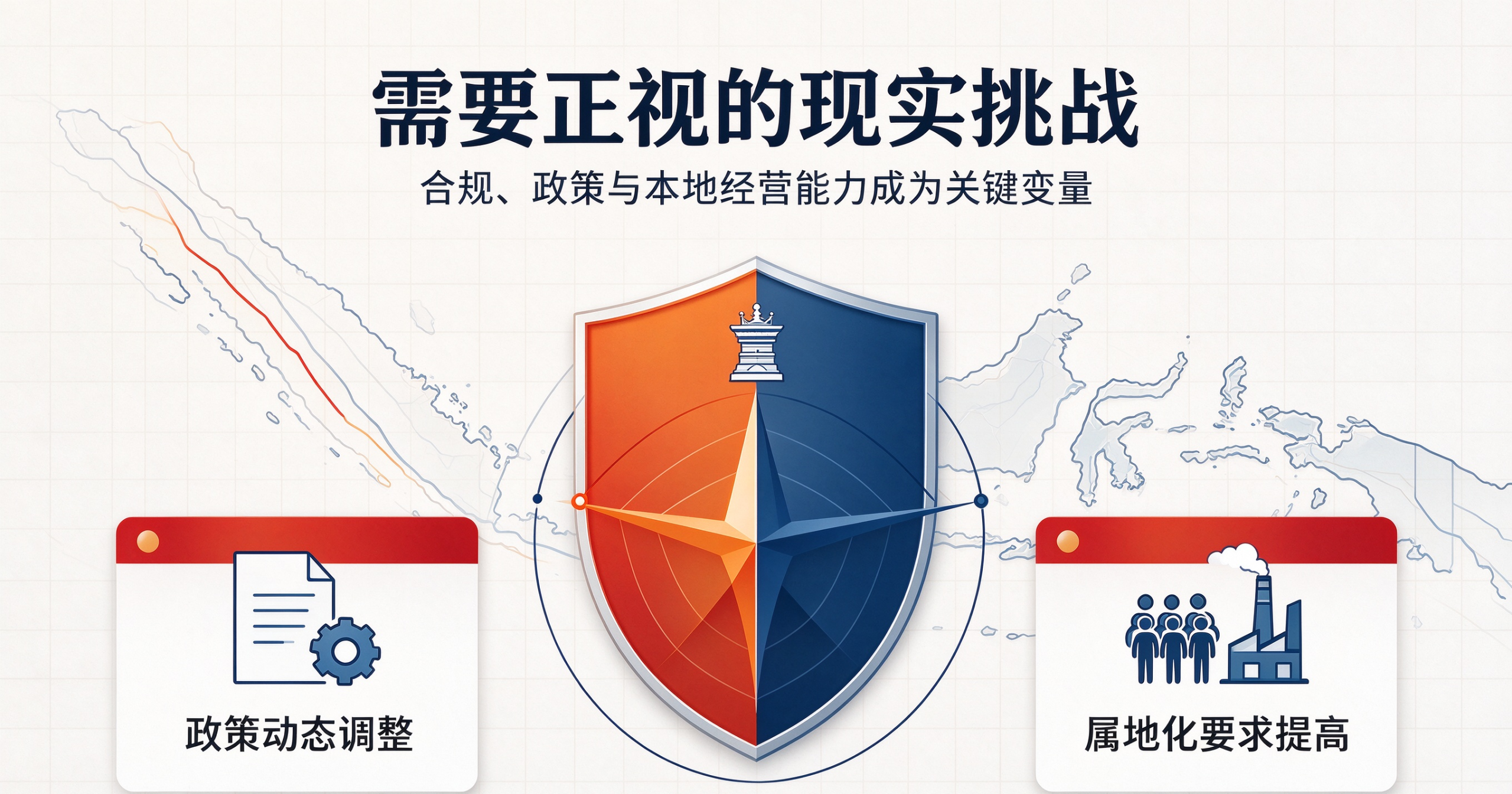
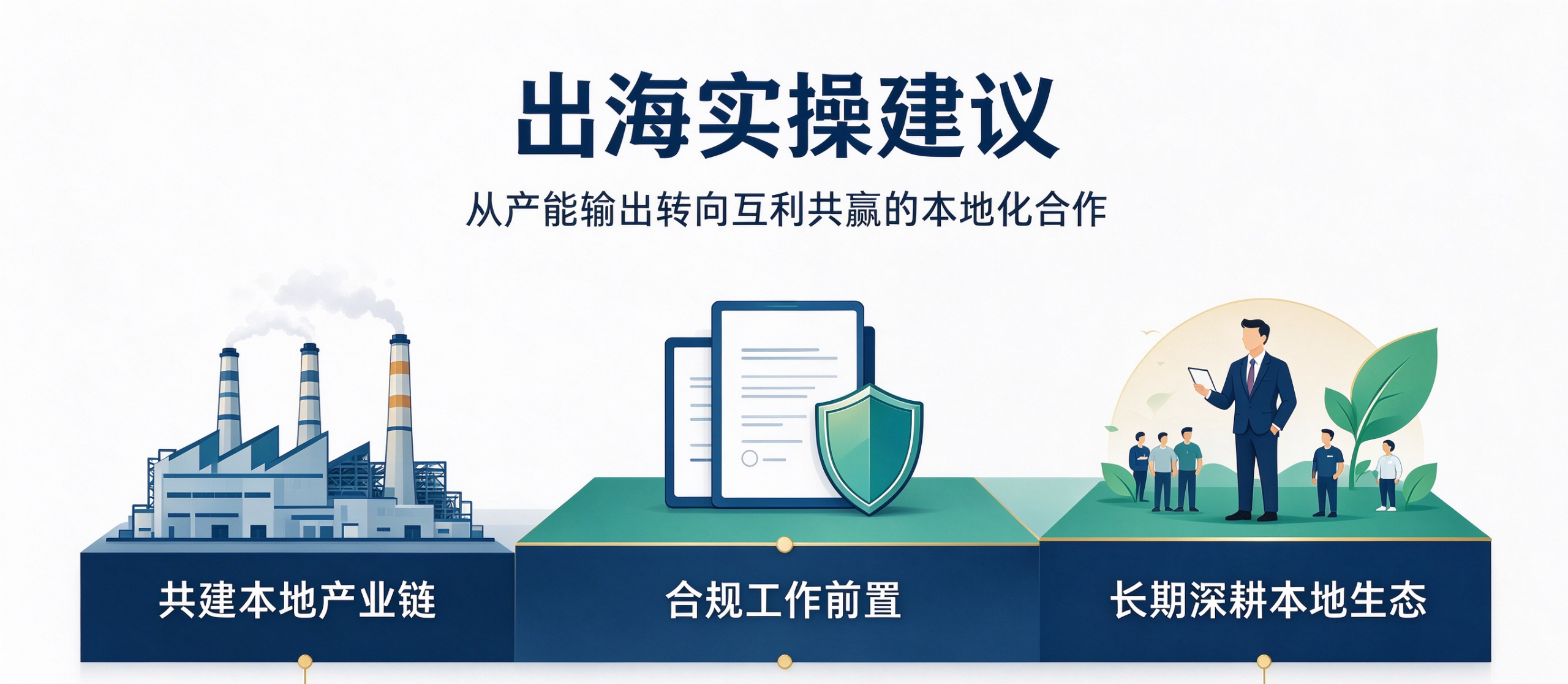
Overall, Indonesia’s opportunities stem from supply chain diversification, resource downstream development and regional market growth. That said, room for simple re-export and low-value processing is shrinking. A more prudent strategy for Chinese-funded enterprises is to shift mindset from “shifting production location” to “building industrial ecosystems”: delivering genuine local production, job creation, tax contribution, local procurement, talent development and technology transfer in Indonesia. Only by lifting local value addition can capital and orders brought by external competition be translated into sustainable long-term industrial outcomes.
(This article is compiled from public information, for industry exchange only, and does not constitute investment advice.)
