In early October 2026, the plenary session of Indonesia’s House of Representatives passed the draft Employment Protection Law. Recently, the law was officially enacted as Law No. 27 of 2026 (UU No. 27 Tahun 2026), taking effect on the date of promulgation. Comprising 23 chapters and 313 articles, the new law implements Constitutional Court Decision No. 168/PUU-XXI/2023, consolidating labour provisions previously set out in Law No.13 of 2003 (Manpower Law) and Law No.6 of 2023 (Job Creation Law) into a standalone legal framework for employment protection. For businesses operating in Indonesia, new changes must be noted in workforce management covering employment contracts, outsourcing, termination, compensation and leave entitlements.
I. Employment Contracts and Foreign Workers
Rules for fixed-term contracts are clarified. The new law caps the maximum term of fixed-term employment contracts (PKWT) at 2 years, with two extensions permitted, each not exceeding 1 year. Enterprises shall review the term, renewal history and job placement of existing contracts.
Seizure of personal documents is expressly prohibited. Employers may not request or withhold diplomas or other personal documents from workers as collateral within an employment relationship.
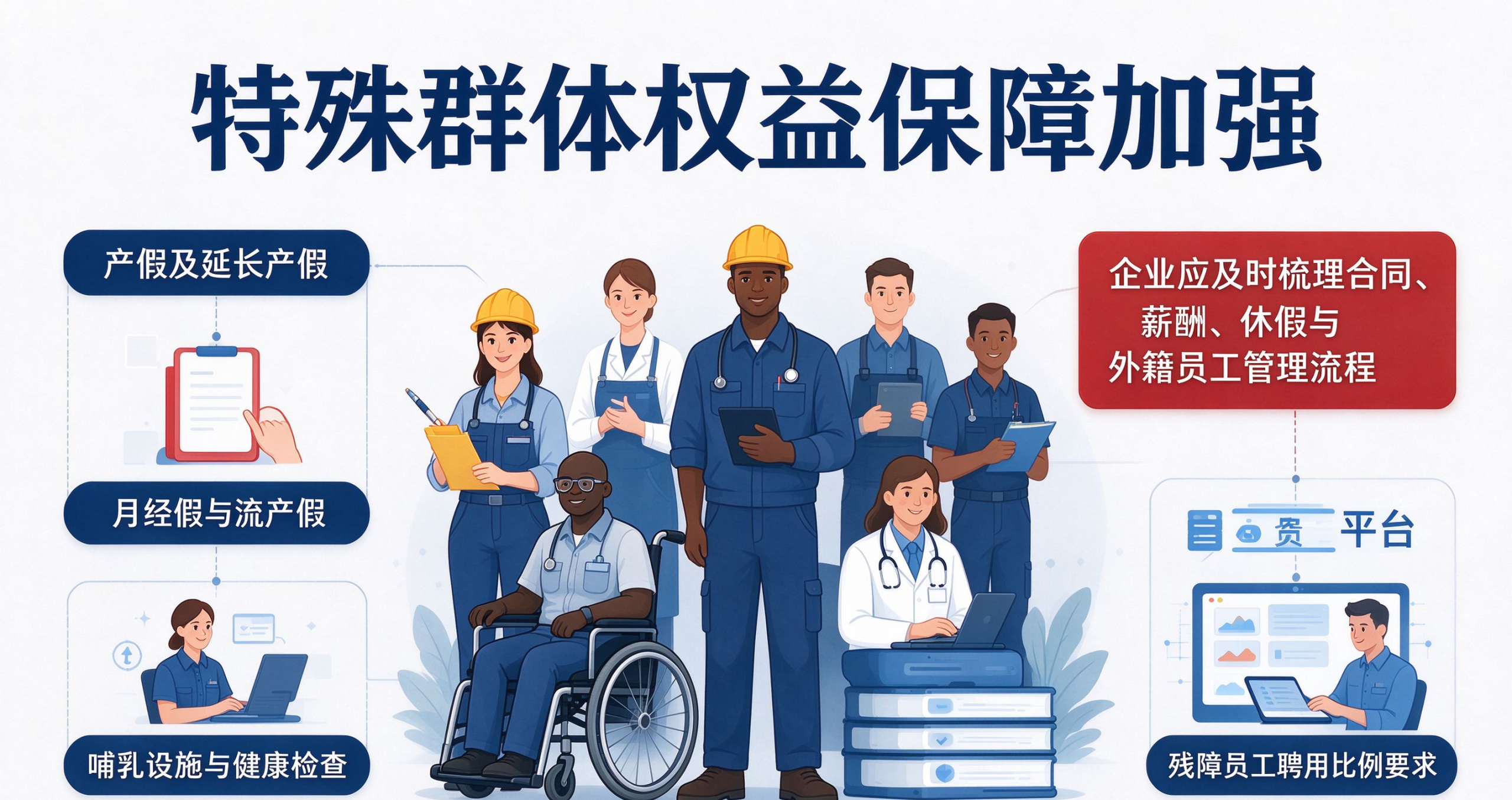
Restrictions on positions for foreign workers are further defined. Foreign workers may only fill roles that Indonesian nationals are unable to perform, with tighter oversight on their employment. Special arrangements apply to foreign spouses and their children who are in a valid marriage with Indonesian citizens.
II. Remuneration, Termination and Security Mechanisms
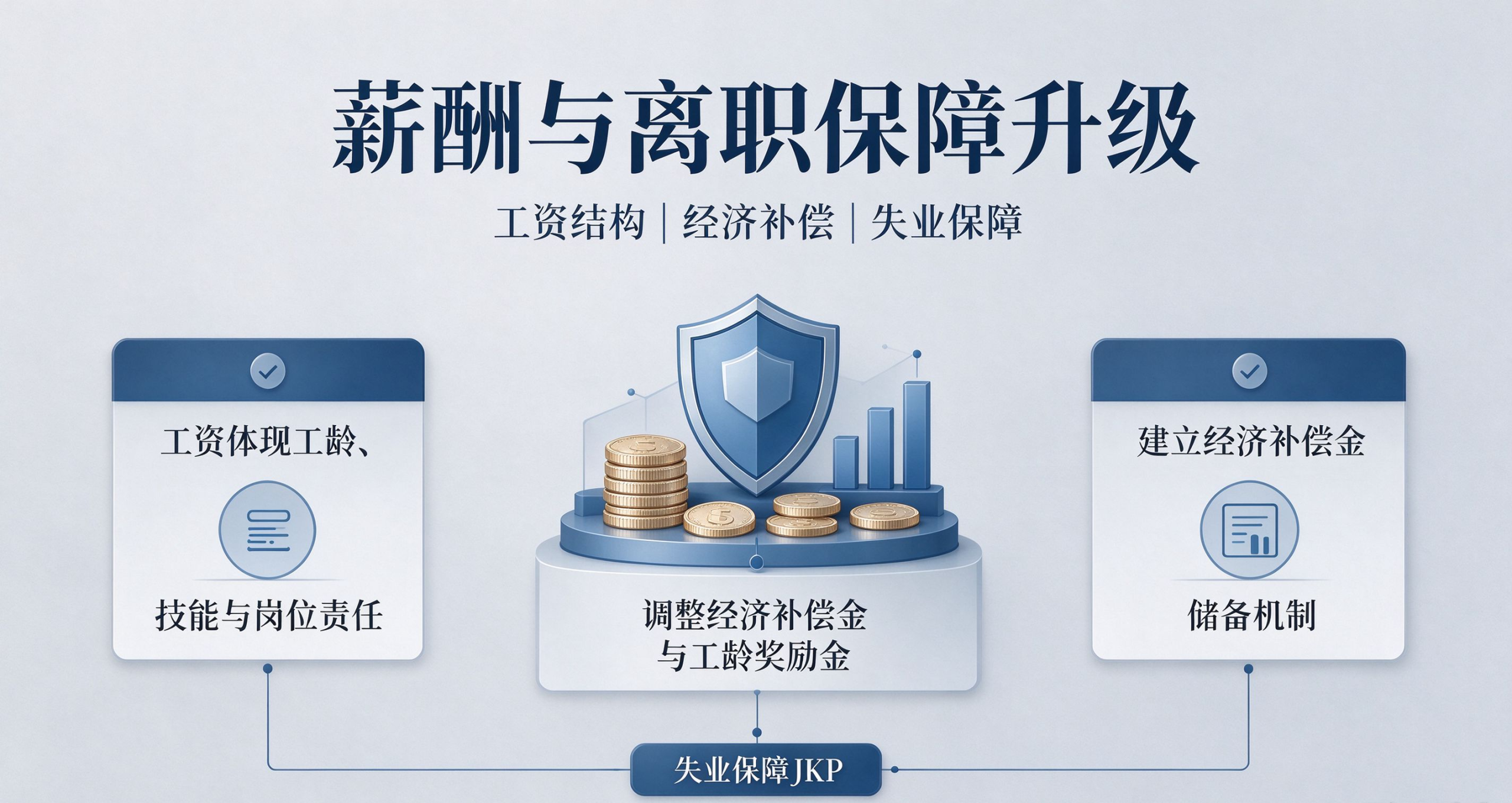
Wage structures shall reflect role and competency. The new law stipulates that wage scales and tiers must correspond to workers’ tenure, skills and job responsibilities.
Linkage between severance pay and unemployment security. The law revises provisions on severance pay, service awards and entitlement compensation. It introduces a severance reserve fund and supporting mechanisms, and integrates unemployment security (JKP) into the system safeguarding workers’ rights.
Scope of outsourcing is restricted. The law limits the types of activities eligible for outsourced labour. Businesses relying on outsourcing shall reassess the boundaries of such arrangements.
Broader protection for flexible workers. Workers in the informal sector are brought under employment protection and social security schemes; platform workers and other flexible workers are covered, and social security protection is extended to certain other working relationships.
Maternity leave and wage protection are strengthened. Female workers are entitled to three months of maternity leave before and after childbirth, extendable by a further three months under special circumstances, with wages guaranteed during leave. Miscarriage leave with corresponding wage protection is also provided.
Provisions on menstrual leave and lactation facilities. Female workers may take up to 2 days of menstrual leave per cycle. Employers must provide dedicated lactation spaces and facilities to enable breastfeeding during working hours. Female workers in high-risk sectors are entitled to enhanced regular reproductive health checks.
Mandatory quota for workers with disabilities. Private enterprises shall employ persons with disabilities at a minimum rate of 1% of their total workforce; the minimum quota is 2% for central government, local governments, SOEs and regional SOEs.
Conduct an urgent compliance review of workforce practices. Companies are advised to audit contract terms and renewals, handling of personal documents, compliance for foreign worker postings, wage and severance reserve arrangements, limits for outsourcing and platform labour, protections for female staff and disability hiring quotas, and update internal policies and contract templates accordingly. Implementation shall be subject to official texts and professional legal advice.