

On April 9, 2025, Trump issued a revised executive order, increasing the additional tariffs on Chinese goods from 104% to 125%, effective immediately. On the other hand, the “reciprocal tariffs” were suspended for 90 days for countries that did not take retaliatory actions, with tariffs restored to the base rate of 10%.
📌 April 2: Trump issued an executive order, imposing a 34% reciprocal tariff on China, in addition to the previous 20% blanket tariff, totaling 54% tariffs; China retaliated with a 34% tariff.
📌 April 8: Trump issued a revised executive order, raising the tariffs on Chinese goods to 104%; China retaliated by increasing its tariffs to 84%.
📌 April 9: Trump issued a revised executive order, raising the tariffs on Chinese goods to 125%; the “reciprocal tariffs” on other countries were suspended for 90 days, with tariffs restored to the base rate of 10%.
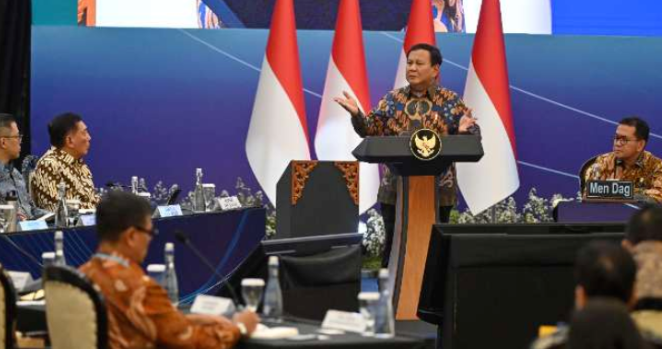
On April 8, as U.S. tariffs on Chinese goods soared to 104%, Indonesian President Prabowo made a clear response to the U.S. “reciprocal tariffs” policy at an economic symposium held in Jakarta.
He stated that Indonesia is willing to reach a fair and mutually beneficial trade agreement with the United States and explicitly declared that Indonesia will not take retaliatory tariff measures. Instead, it will actively address this challenge through diplomatic channels and domestic reforms. The Coordinating Minister for Economic Affairs, Airlangga, has been instructed to travel to the U.S. to start negotiations and to strengthen coordination with ASEAN countries to seek a unified regional response.
Through this strategy, Indonesia successfully obtained a 90-day tariff exemption period, which has bought Indonesia valuable time for diplomatic and economic adjustments.
Indonesia’s Four Major Proactive Strategies
- Re-launching the Trade and Investment Framework Agreement (TIFA)
Indonesia plans to revise the TIFA agreement, which was signed in 1996, to update and improve key provisions so that it better adapts to the current international trade environment and bilateral economic needs. This move will help promote stable trade relations with the U.S. and provide a framework for resolving future trade disputes.
- Easing Local Content Requirements (TKDN)
In the information and communication technology sector, Indonesia plans to reduce local content requirements (TKDN) and re-evaluate existing import and export restrictions. This adjustment will help reduce trade barriers, promote investment and cooperation of U.S. companies in the Indonesian market, and further deepen economic interaction between the two countries.
- Increasing Imports of U.S. Products
As instructed by Prabowo, Indonesia will increase imports of liquefied petroleum gas, natural gas, and agricultural products from the U.S. Airlangga emphasized that this move aims to balance trade by adjusting the procurement structure, rather than increasing the overall volume of imports. It is intended to send a gesture of goodwill to the U.S. and promote balanced bilateral trade. Through this approach, Indonesia hopes to strengthen cooperation with the U.S. and avoid direct conflict.
- Implementing Incentive Policies
The Indonesian government plans to enhance the international competitiveness of its exports to the U.S. by reducing import tariffs, income tax on imports (PPh), and value-added tax (PPN). This strategy will help Indonesia further improve its position in the global market, especially in labor-intensive industries, where it aims to achieve greater breakthroughs.
Dual Safeguards: Short-term Negotiations and Long-term Reforms in Parallel
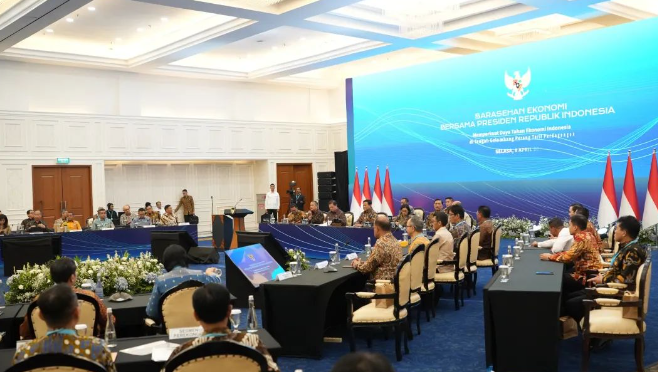
In responding to U.S. tariff pressures, Indonesia has demonstrated proactive and flexible strategies, combining short-term negotiations with long-term structural reforms.
- Short-term Pragmatic Negotiations
Minister Airlangga will lead a delegation to the U.S., focusing on tariff exemptions and market access clauses, striving to avoid direct conflict with the United States. At the same time, Indonesia will coordinate its position with ASEAN countries to enhance regional bargaining power and seek more favorable conditions.
- Long-term Structural Reforms
To address global economic challenges, Indonesia will also implement a series of domestic reforms:
- Industry Protection: By establishing a labor-intensive industry task force to combat illegal imports and protect the stability of domestic industries.
- Market Diversification: Accelerating free trade agreement negotiations with the European Union to expand into the European market; deepening cooperation with China under the “Belt and Road” framework to promote infrastructure and resource processing cooperation.
- Governance Upgrade: Encouraging private enterprises to lead the development of digital economy special zones and port construction to attract foreign investment and technology transfer.
Faced with the challenge of U.S. tariff increases, Indonesia has demonstrated proactive strategies. Instead of retaliating with countermeasures, it has adopted a dual approach of diplomatic negotiations and economic reforms, striving to protect national interests through a flexible and pragmatic foreign policy. At the same time, Indonesia has also actively undertaken reforms to promote domestic industrial upgrading and diversify its market layout, ensuring long-term economic stability and growth. The current 32% reciprocal tariff imposed by Indonesia will eventually be reduced; it is just a matter of degree.
The series of measures taken by the Prabowo government marks Indonesia’s confidence and adaptability as a middle power in the global economy. In the future, Indonesia will occupy a more advantageous position in the global trade environment, continue to achieve economic recovery and growth, and become an important player in the regional economy.
Seize the Initiative and Make a Move in Indonesia – An Action Initiative for Manufacturing Decision-Makers
In the current reshaping of the global trade landscape, waiting and seeing is the costliest strategy! As the largest economy in ASEAN, Indonesia is offering a “zero-time-difference” production solution for the manufacturing industry with a combination of national-level economic special zones and ready-to-use standardized factories:
1. Tariff Breakthrough
Bypass the U.S. additional tariff list of 125% on Chinese goods. Relying on the ASEAN Free Trade Area (AFTA) and the Regional Comprehensive Economic Partnership (RCEP), enjoy zero-tariff export treatment for 90% of goods within the region.
2. Cost Lock-in
Tax Policy: Enterprises in the special zone enjoy a 15-year corporate income tax exemption (tax-free for the first 5 years, and half for the next 10 years), and import tariffs on equipment are completely exempted;
Labor Costs: The proportion of labor force under 25 years old is 38%, and the average monthly salary in the manufacturing industry is only one-third of that in China;
Energy Security: The electricity price is about 0.5 RMB, and the peak price is 0.75 RMB.
Employee Social Security: The medical insurance premium is paid by the enterprise and the employee at 1% of the salary each, the pension insurance is paid by the enterprise at 8.4% of the salary, and the work injury insurance is paid by the enterprise at 0.24% of the salary. (The total is less than 10%)
3. Ready-to-Use Advantage
In the Batang Economic Special Zone of Central Java Province, there are 1 million square meters of high-standard factories available for “immediate rent and use”:
✓ Complete supporting facilities
✓ Adjacent to the highway
✓ Bonded area
✓ Green and energy-saving factories
✓ “One-stop” service
At this moment, what is rarer than a “cost-effective洼地” is the resource of a “strategic springboard”.
Please contact our investment promotion team immediately to obtain a customized implementation plan – starting to run while others are hesitating is the real dimensional competition!

Bilingual (Chinese-English) Officer of a Certain Economic Special Zone Management Committee in East Java, Indonesia, Responding 24/7
